

10 D-ID Alternatives for 2026
The best D-ID alternative depends on what you actually want the presenter to do. HeyGen is the strongest all-around choice for polished talking-avatar videos; Synthesia makes more sense for structured training; and Colossyan is built around learning content. Tavus belongs on a different shortlist if the goal is a live conversation rather than a finished video.
Key takeaways
HeyGen is the strongest overall D-ID alternative for polished presenter-led videos.
Synthesia and Colossyan are better suited to structured training, onboarding, and course production.
Tavus is designed for interactive digital people that respond in real time.
Hedra is a stronger option for expressive, stylized character-led video.
Astorie generates supporting footage but does not replace a speaking-avatar workflow.
D-ID Alternatives at a Glance
D-ID is especially recognizable for turning a photo into a speaking face. Not every product below does that in quite the same way, and that distinction matters more than the number of avatars advertised on a pricing page.
| Tool | Best fit | Main limitation | Starting price |
|---|---|---|---|
| HeyGen | Polished avatar videos and translation | Free videos and premium features are limited | $29/mo; free plan |
| Synthesia | Training, onboarding, and team video | Less appealing for one quick talking photo | $29/mo; trial available |
| Colossyan | Learning videos and course workflows | Built for training rather than casual clips | Free plan; paid tiers vary |
| AI Studios | Presenter videos with many avatar choices | Credits and plan allowances need checking | Free plan; paid tiers vary |
| Tavus | Interactive, real-time digital people | Not the simplest prerecorded-video editor | $22/mo; free plan |
| Hedra | Expressive character-led video | Output allowances depend on model and credits | $15/mo; free plan |
| Elai.io | Internal training and reusable presenters | Team-oriented plans can become expensive | Free trial; paid tiers vary |
| VEED | Avatar clips inside a broader video editor | Avatar access depends on plan and credits | Free trial; paid tiers vary |
| Vidnoz | Lower-cost presenter and template videos | Credit rules differ across avatar features | Free plan; paid tiers vary |
| Astorie | Original image-to-video source footage | Does not replace an avatar presenter | Free tier; model credits |
How We Compared These D-ID Alternatives
The comparison centers on the jobs that usually lead someone away from D-ID: creating a convincing presenter, matching speech to mouth movement, choosing a usable voice, exporting the finished video, and understanding what a plan actually includes.
For the two leading alternatives, the shared hands-on check uses the same short script, an adult female presenter, an English-language voice, and a horizontal frame. Official product details and public prices were checked on August 23, 2026. The remaining products are included for their documented strengths, not a claim that all ten were personally tested.
Why Look for a D-ID Alternative?
A talking photo can be enough for a quick introduction. It is less useful when that introduction needs a clean script editor, several scenes, a reusable branded presenter, or a training module that someone else can update next month.
- You need a natural presenter, not just a face that appears to be speaking.
- Your videos need multiple scenes, branded layouts, translations, or team review.
- Monthly video minutes and credit costs matter more than the headline subscription price.
- The actual requirement is a real-time conversation, a course, or original supporting footage.
- A photo-to-avatar tool is solving only one piece of a larger production workflow.
Start with the missing step. Otherwise, it is easy to pay for a different product that still does not solve the original problem.
1. HeyGen: Best Overall D-ID Alternative
Best for: marketing teams and creators who want a credible on-screen presenter without filming someone every time.
HeyGen feels closest to the broader version of what many people hoped D-ID would do: select a presenter, write a script, choose a voice, and turn the result into a complete video. Its avatar library, translation tools, and scene-based editing make it suitable for product explainers and multilingual announcements, not just isolated talking heads.
The useful test here is deliberately ordinary: give the presenter one short retail announcement and watch whether the delivery feels composed, the mouth follows the audio, and the final video can actually be exported.
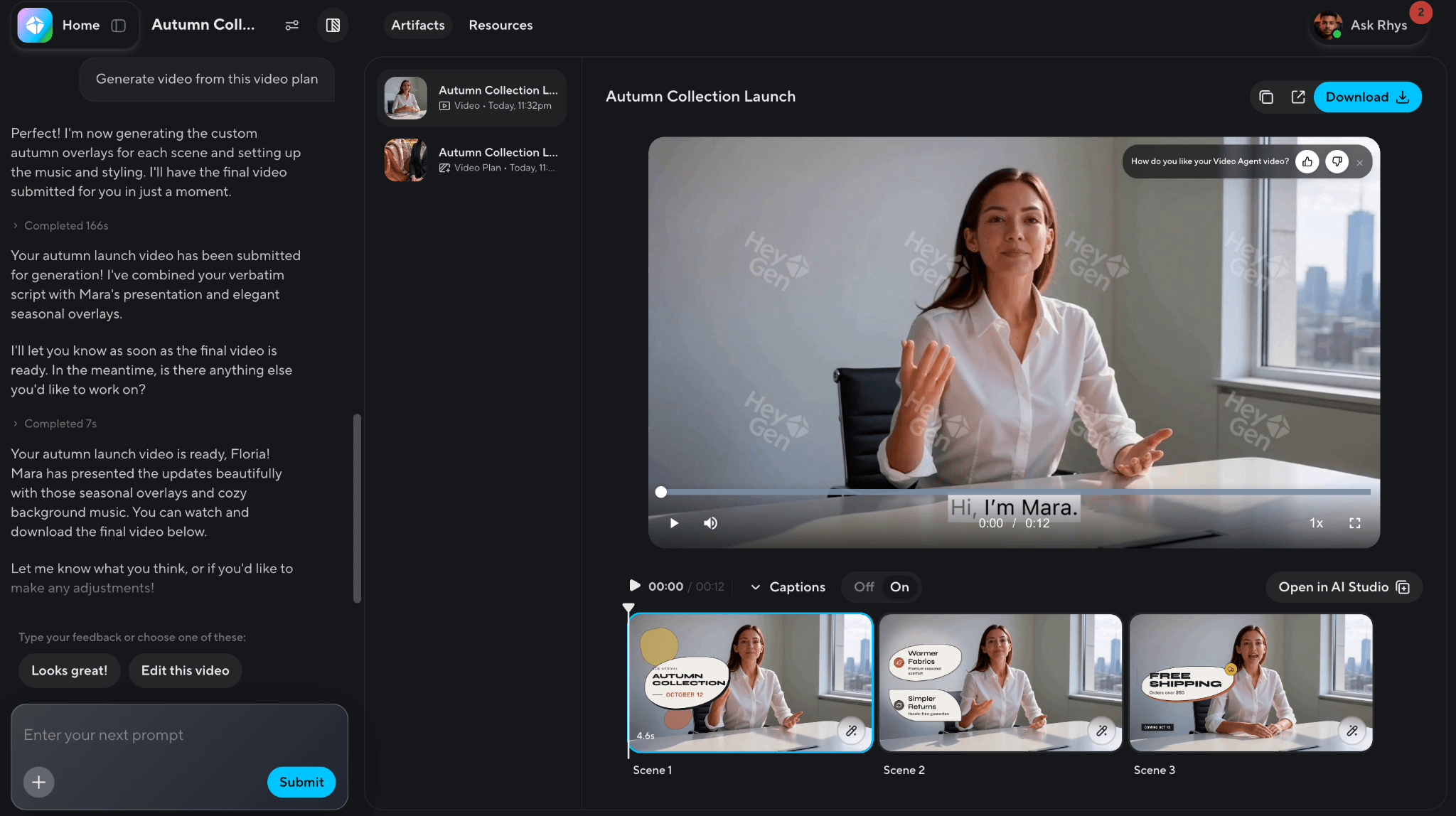
HeyGen kept the script, avatar preview, and scene timeline in one working view.
The test took about 15 minutes. The guided agent was the strongest part of the experience: after the avatar and script were selected, it asked three useful questions about wording, visual tone, and the main point viewers should remember. That made the setup approachable even without much avatar-video experience.
The English voice sounded natural, but the delivery was slow and some gestures and transitions felt visibly assembled rather than continuous. The free account also limited the available models and video quality, so the result was useful for judging the workflow rather than for a finished campaign export.
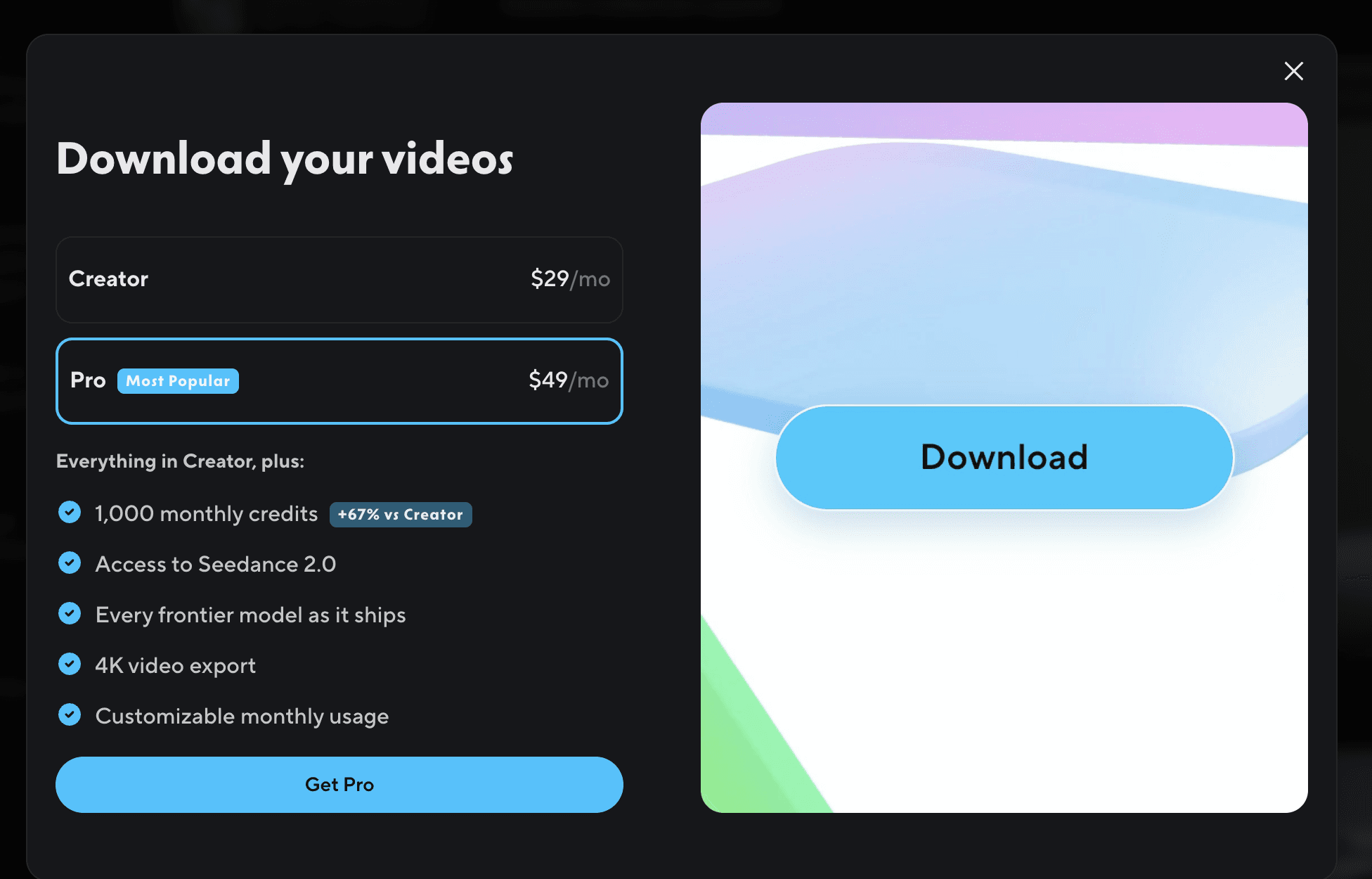
HeyGen reached an upgrade screen when we tried to download the finished video; the free workflow allowed a test, but not a usable video export.
Trade-off: The free plan is useful for a trial, but video length, premium avatars, and advanced features are restricted.
Pricing: A free plan includes three short videos per month. Creator was listed at $29 per month, or $24 per month on annual billing.
2. Synthesia: Best D-ID Alternative for Training Videos
Best for: learning, onboarding, and internal communications teams that need consistent presenter-led videos across multiple scenes.
Synthesia is less concerned with the novelty of making a photograph talk and more concerned with producing a video someone can actually use at work. Scripts, scenes, layouts, and presenters fit naturally into onboarding lessons, policy updates, and product training. The more structured the project, the more that difference matters.
Use the same announcement, the same type of presenter, and the same horizontal composition as the HeyGen test. The comparison is not about which avatar has better hair; it is about whether the whole delivery feels believable and editable.
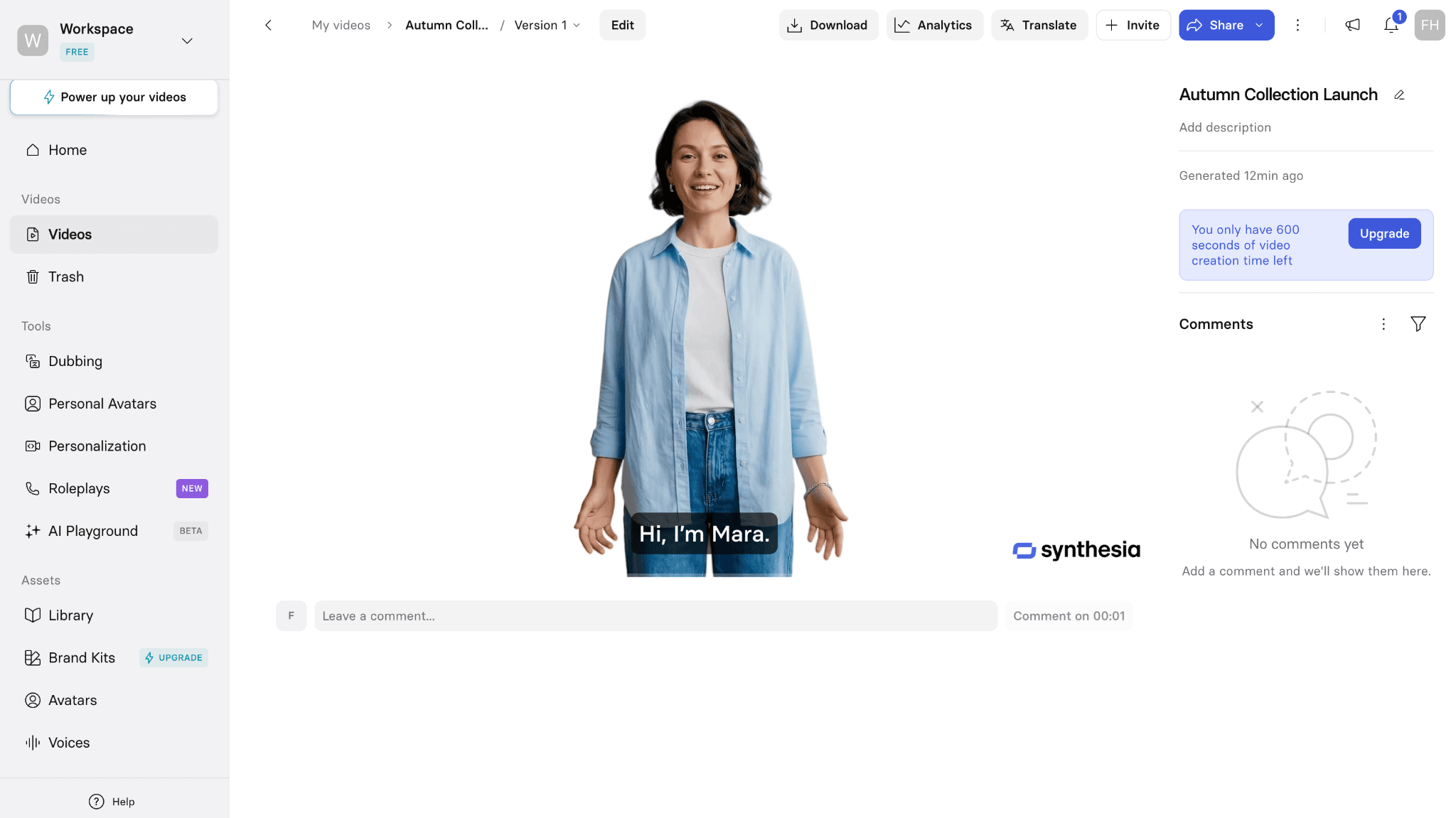
Synthesia placed the avatar, script, and scene controls inside a clean, slide-based workspace.
The same announcement took about 20 minutes to set up. The avatar movement and business-English voice felt natural, and the overall result had a restrained, modern corporate style. For structured training material, that consistency was more convincing than a highly expressive presentation would have been.
The first-use experience was less direct than HeyGen. Clicking Create Video opened a large template gallery, and the editor behaved more like a presentation builder than a traditional video editor. That structure is useful once the project has several scenes, but it takes longer to understand when the goal is one short clip.
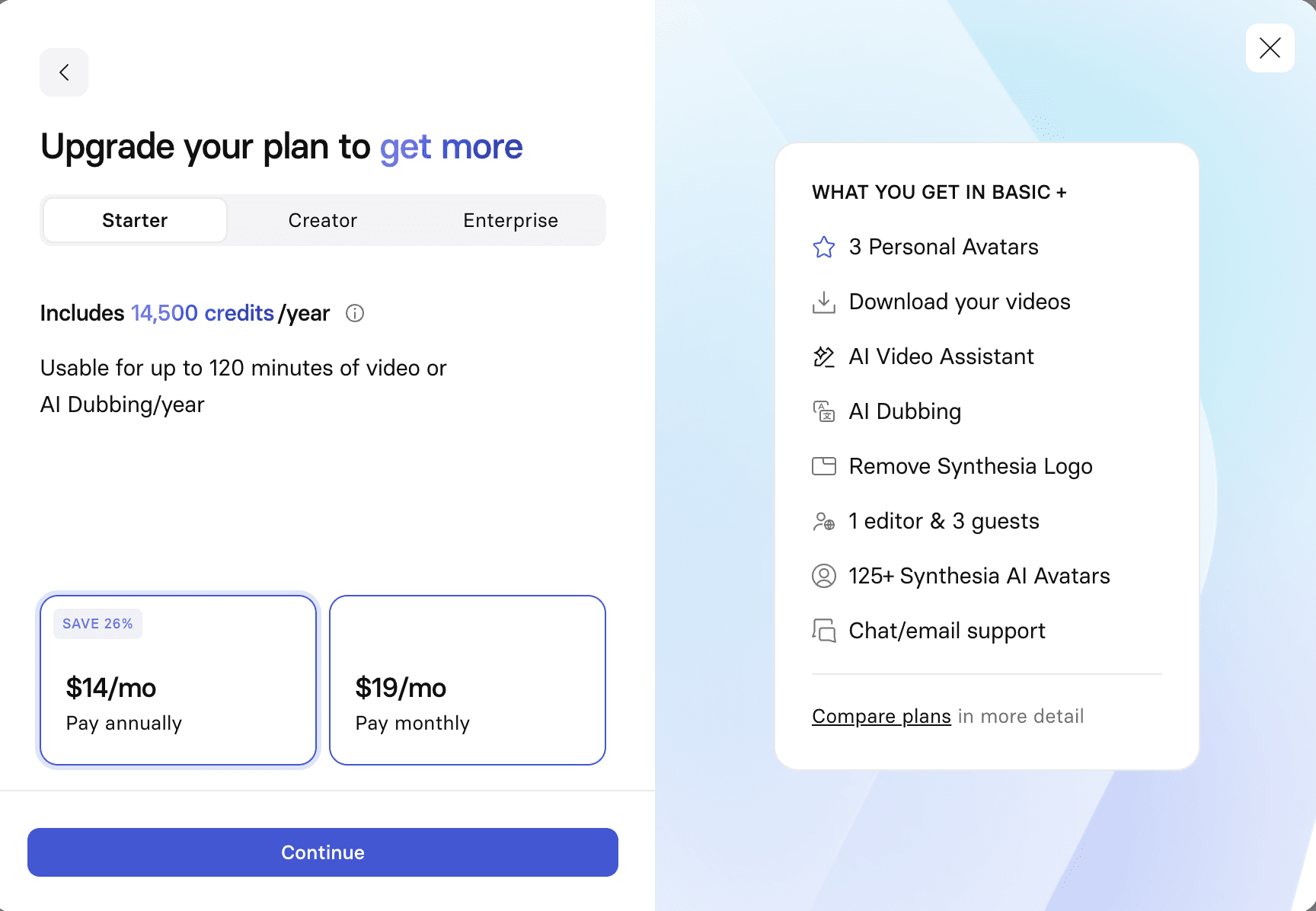
Synthesia's free account let us explore the workflow, but downloading the finished video required an upgrade.
Trade-off: The training-oriented workspace can be more than you need for a single quick talking-photo experiment.
Pricing: Starter was listed at $29 per month, or $22 per month when billed annually, with a monthly video-minute allowance.
More D-ID Alternatives
3. Colossyan: Training Content That Needs an Actual Structure
If the video is part of a course rather than a standalone social post, Colossyan is worth a look. Its emphasis on learning workflows, multiple editors, and SCORM exports makes the difference when a training team needs to maintain a library of lessons.
A free Starter plan is available; the Professional plan was listed at $59 per month on annual billing. It is a less natural fit for someone who simply wants to animate one photograph and leave.
Choose Colossyan over D-ID when the deliverable is a maintained course with team editing and SCORM export; stay with D-ID when the job is simply to make one uploaded photo speak.
4. AI Studios: More Presenters, Languages, and Templates
AI Studios, from DeepBrain AI, is aimed at people who would rather start with a ready-made presenter and a usable template than assemble a video from scratch. That breadth can be helpful for repeatable marketing explainers or localized announcements.
There is a free plan, but the practical question is how quickly the available credits disappear when the script, voice, or avatar changes. Check the current allowance before committing to a production schedule.
Choose AI Studios over D-ID when presenter variety, templates, and multilingual business videos matter more than photo animation; D-ID remains the more direct option for a quick talking-photo clip.
5. Tavus: Digital People You Can Talk Back To
Tavus answers a different question: what if the avatar needs to respond instead of delivering a fixed script? Its conversational video tools and custom digital replicas make more sense for interactive support, personalized demonstrations, or a product that needs an embedded digital person.
That is a compelling use case, but it is unnecessarily complicated if all you need is a five-sentence presenter video. The Starter plan was listed at $22 per month; a free tier is also available.
Choose Tavus over D-ID when the digital person must respond in real time or personalize each interaction; D-ID is the better fit for a straightforward prerecorded avatar video.
6. Hedra: Character-Led Video with More Personality
Hedra is the interesting option when the person on screen does not need to look like a corporate trainer. It leans toward expressive characters, stylized avatars, and creative performance, so it can feel better suited to a campaign concept or fictional spokesperson.
Paid plans started at $15 per month when checked. The trade-off is that creative flexibility and character performance do not automatically replace the approval, lesson-building, and collaboration tools in a training suite.
Choose Hedra over D-ID for a stylized character or a more expressive creative performance; D-ID is safer when the priority is a conventional talking photo and a simpler presenter workflow.
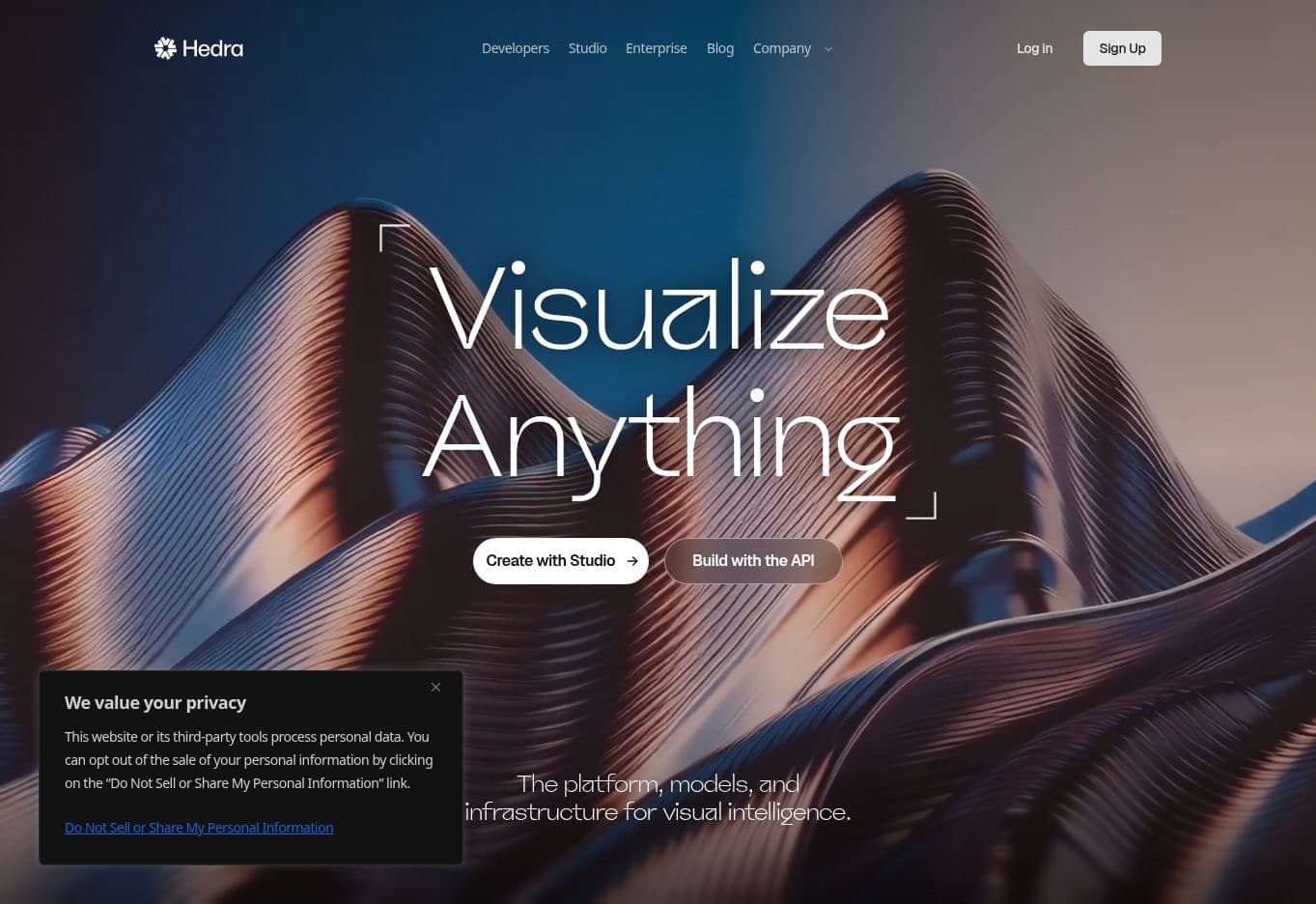
Hedra's public homepage presents a broader visual-creation and avatar platform; this is an official product-page view, not a hands-on test.
Additional D-ID Alternatives
7. Elai.io: Presenters for Repeatable Learning Videos
Elai.io is built around the kind of presenter-led content organizations need to update repeatedly: onboarding, product education, and internal training. Templates and reusable avatars help when the material changes more often than the visual format.
A trial is available, but team plans and monthly video-minute allowances deserve a close look before a department starts treating the tool as an unlimited video factory.
Choose Elai over D-ID when a team needs reusable presenters and repeatable training modules; D-ID is more direct for a one-off speaking-photo experiment.
8. VEED: Put the Avatar Inside a Real Video Edit
VEED is a practical middle ground if the presenter is only one part of the finished video. You can build an avatar segment and keep moving into subtitles, trimming, layouts, and other familiar editing tasks in the same browser-based environment.
Its stock avatars are available to try, while broader usage depends on plan and credits. The avatar controls are not the sole focus in the way they are with a dedicated presenter platform.
Choose VEED over D-ID when subtitles, trimming, layout, and export need to happen in the same browser editor; D-ID is more focused when the only requirement is turning a still image into a talking face.
9. Vidnoz: An Accessible Starting Point for Simple Avatar Videos
Vidnoz is easy to understand: pick a presenter, choose a template, write a script, and see what the result looks like. The free plan makes it approachable for a small team comparing basic options.
Its catch is the credit structure: ordinary video generation, expressive avatars, and product avatars do not necessarily consume credits at the same rate. Compare the feature you intend to use, not just the lowest number on the pricing page.
Choose Vidnoz over D-ID when budget and template speed matter most for basic presenter videos; D-ID is the stronger choice when you want a more focused talking-photo workflow and fewer feature-specific credit rules.
10. Astorie: Create the Supporting Footage Before the Presenter
Astorie is relevant when the missing piece is not the person speaking but the original scene around that person. In an existing project, we used its canvas to connect a source image, a motion prompt, a video model, and a generated clip.
That clip could support an explainer, but it does not by itself replace HeyGen's or Synthesia's presenter workflow.
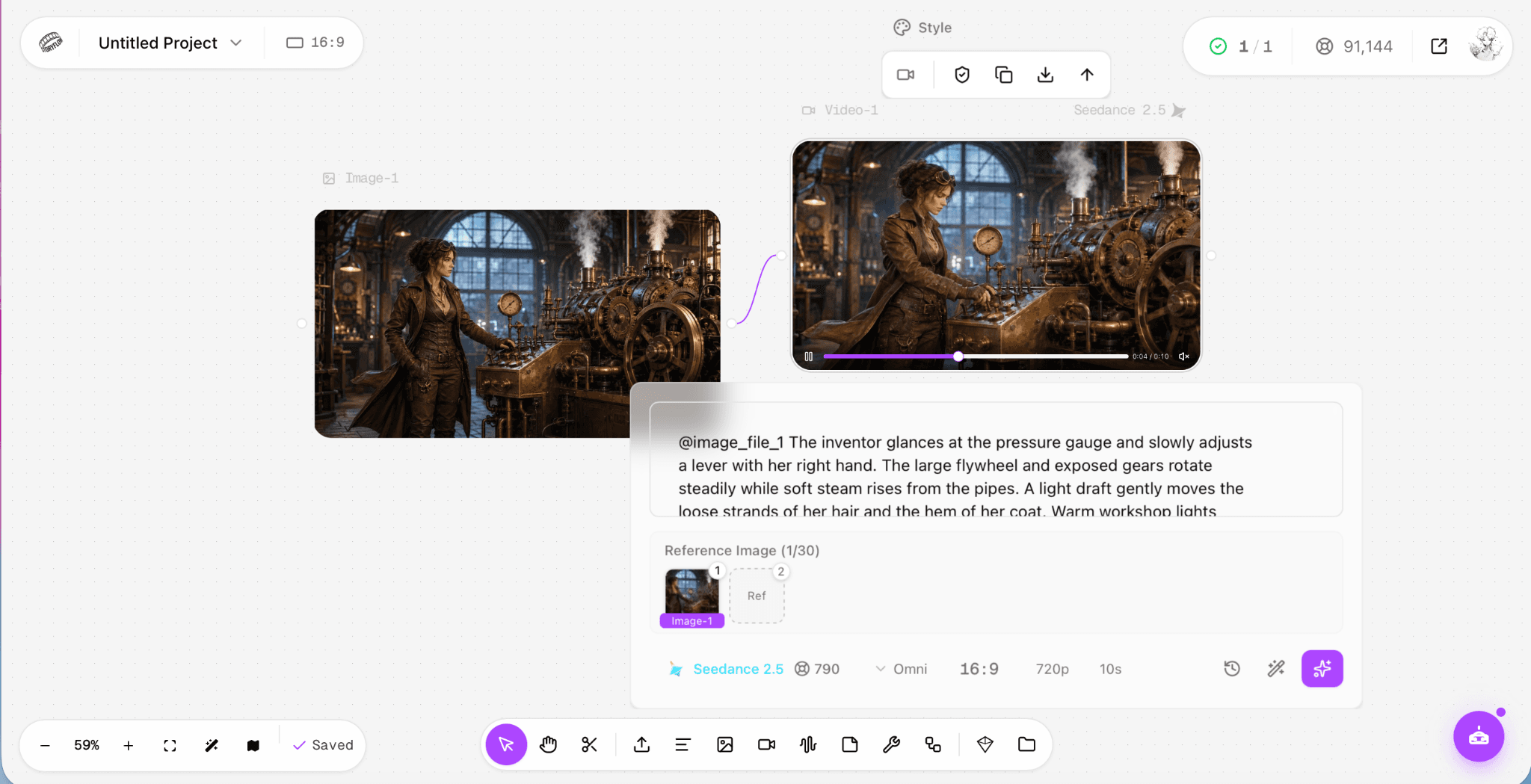
An existing Astorie test shows a real image-to-video workflow that can create supporting footage for a presenter-led video.
Generation is credit-based, and the cost changes with the model, resolution, and duration.
Which D-ID Alternative Fits Your Actual Job?
| If the job is... | Start with | What matters most |
|---|---|---|
| A polished marketing presenter | HeyGen | Natural delivery, voice, translation, and usable exports |
| Onboarding or training videos | Synthesia or Colossyan | Scenes, updates, team review, and learning workflows |
| A digital person that answers back | Tavus | Real-time interaction and integration requirements |
| Stylized character performance | Hedra | Character expression rather than a corporate presenter |
| Low-cost first experiments | Vidnoz or a free plan | Watermarks, credits, and actual export permissions |
| Original supporting video footage | Astorie | Source image, motion control, and per-generation cost |
One detail is easy to miss: a cheap subscription is not necessarily cheap if the monthly allowance only covers a handful of finished minutes. Compare video minutes, watermark rules, voice access, and the cost of rerunning a scene.
Is D-ID Still Worth Using?
Yes, especially when the job is turning a photograph into a speaking character or testing an avatar-led idea quickly.
D-ID becomes a weaker fit when the real requirement is a complete training workspace, detailed multi-scene editing, live conversation, or a broader post-production workflow. In those cases, the right alternative is the one that removes the missing step rather than adding another layer of avatar marketing.
The Bottom Line
Choose HeyGen when the priority is a polished presenter, Synthesia when the video needs to work inside a training process, and Tavus when the presenter must respond in real time.
For everything else, decide whether the problem is the avatar, the edit, or the footage around it before choosing another subscription.
Frequently asked questions
- What is the best D-ID alternative overall?
HeyGen is the strongest starting point for a complete presenter-led video, while Synthesia is usually the better fit for structured training and onboarding.
- Is there a free alternative to D-ID?
HeyGen, Colossyan, AI Studios, Tavus, and Vidnoz offer free access or a free tier with restrictions. Check video length, watermark rules, and export permissions before assuming the output is usable.
- Which D-ID alternative is best for employee training?
Synthesia and Colossyan are the clearest fits because their workspaces are designed around scripted scenes, reusable presenters, and training-oriented production.
- Can these tools animate an uploaded photograph?
Some can, but the capability varies. A stock AI presenter, a custom avatar, and a speaking photograph are different features, so verify the exact input and permissions before subscribing.
- What should I compare besides the monthly price?
Look at included video minutes, custom-avatar access, voice options, render time, watermark-free export, commercial-use terms, and the cost of repeating or translating a scene.
- Can an image-to-video generator replace D-ID?
Not on its own. It can create useful supporting footage, but a complete D-ID replacement also needs the speaking-avatar, script, voice, and lip-sync capabilities required by your project.
Related reading
Runway Gen4 vs Veo vs Kling: Practical Video Production Comparison
Practical comparison for AI video production choices across Runway Gen4, Google Veo, and Kling.
7 Best Photoroom Alternatives in 2026 (Tested for Ecommerce Photography)
Do you need a Photoroom alternative that goes beyond simple background cutouts and batch image processing? Try these 7 tools and pick the one that best matches your AI product photography use cases.
6 Ideogram Alternatives for Killer AI Image Generation
Here are 6 tried and tested Ideogram alternatives that work best for prompt accuracy, text, image realism, character consistency and are intelligent enough to render real-world scenarios and logic.
Ready to try it on the canvas?
Open Astorie and fan your prompt across every frontier model in one workflow.