Learn how to make a script for a video by starting with clear beats instead of a long paragraph. This workflow shows how to turn an idea into a video script, storyboard, production prompt, and AI-generated video while making actions, object changes, and continuity easier for the model to follow.
Learn how to make Veo 3 videos longer using Veo 3.1 Extend. This workflow shows how to turn an 8-second base video into a 15-second continuous sequence by connecting the original clip directly to the Extend node, writing a continuation prompt, and checking visual continuity at the extension point.
Learn how to make Grok videos longer without rebuilding the original scene. This workflow shows how to extract a clean frame near the end of an existing clip, use it to guide the next generation, and maintain character, environment, and lighting continuity across two Grok videos.
Learn how to make a video cinematic by improving shot direction rather than relying on filters, black bars, or higher resolution. This before-and-after workflow shows how composition, lighting, motivated camera movement, and pacing transformed a simple AI-generated café scene.
Learn how to make a marketing video by defining your target audience, campaign goal, and distribution channel before production. This workflow shows how to turn a product brief into reusable visual assets, a timed storyboard, and a 9-second AI product ad using MiniMax H3.
Make AI anime videos by separating visual design from animation. Start with a consistent character and environment, create one approved opening frame, and plan each shot around clear actions, camera movement, focus, and pacing. This workflow shows how to turn those assets into a connected four-shot anime sequence using Seedance 2.5.
To make short AI videos, define one hook and one payoff, prepare only the references each element needs, generate in the target aspect ratio, and audit the export before publishing. This tutorial shows the full process with a tested 15-second vertical UGC clip in Astorie.
To make long AI videos, plan the finished story first, break it into short shots, generate and approve each shot separately, then assemble the clips, stills, narration, captions, and music in an editor. In the documented Astorie project, seven stills and several five-second clips became a 60-second historical short through external timeline editing.
To make realistic AI videos, lock the visual facts before you animate, direct one believable action per shot, keep camera movement restrained, and reject any clip that changes the subject, vehicle, lighting, or geography. A seven-image Tang-dynasty farewell project shows how this workflow works in practice and where continuity can still fail.
To make an educational video, define one learning outcome, write a narration that teaches it, match each sentence to evidence or a purposeful visual, add accurate captions, and finish with a check for understanding. A 60-second Li Bai poetry video demonstrates the method with AI-generated historical visuals and a 56.6-second Mandarin voiceover.
To make an AI video of yourself, start with a photo you own, create a clean reusable identity reference, connect it to the video model, and describe the performance by time. This tested Astorie workflow turns one selected reference into a 30-second vertical skincare UGC video.
To make a promo video, choose one offer and one viewer action, show the product or event proof early, and close with a factual CTA. This guide builds a 15-second product-launch promo in Astorie and shows how to adapt the same structure for events and sales.
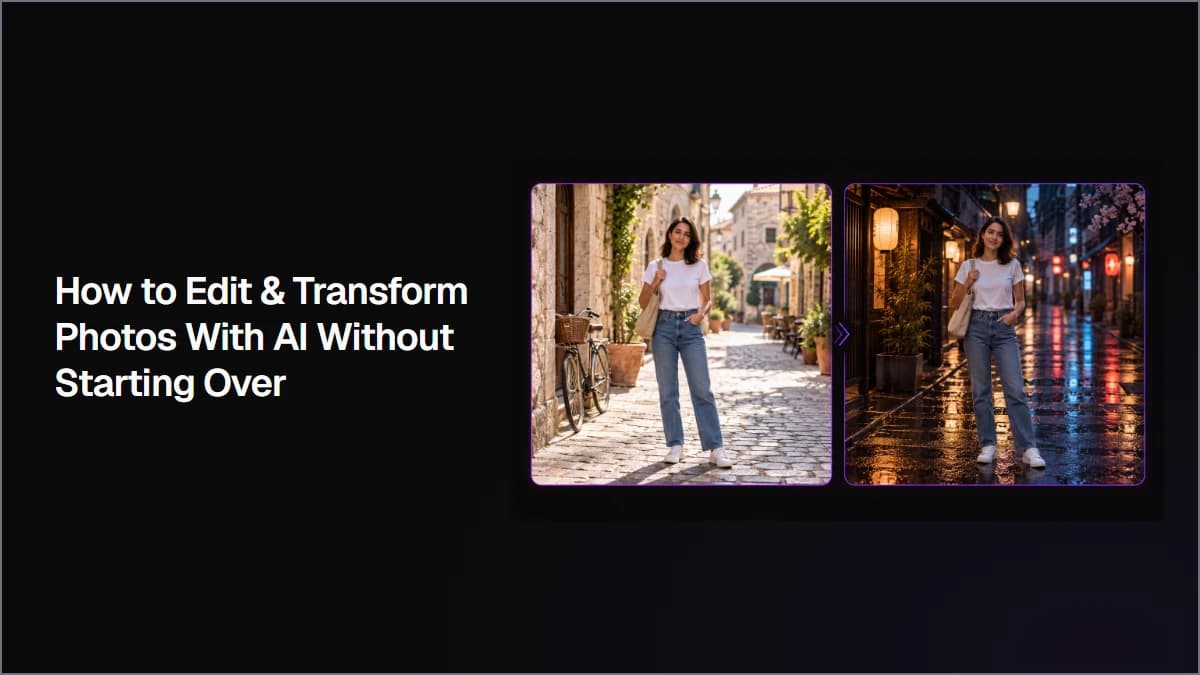
Edit and transform photos with AI by starting with a direct natural-language prompt, then adding tools only when you need more control. This workflow shows when to use masks, background removal, and relighting while preserving the parts of the original photo that already work.