

MiniMax H3 Reddit Review What Users Praise and Question
A MiniMax H3 Reddit review points to three recurring reasons for interest: reference control, convincing individual shots and the ability to run local workflows. The reservations are equally practical: hardware and render time, inconsistent motion or identity, and substantial prompt/workflow tuning. The four discussions below show specific disagreements rather than a unanimous verdict.
Social examples rarely share your source artwork or delivery requirements. In Astorie, an existing illustration can remain next to its H3 output, making the first decision concrete: does this particular shot meet the brief? The supplied project adds two hosted examples to the discussion, with their original prompts and costs preserved below.
MiniMax H3 Reddit review in four discussions
Original thread | What users value | What users question |
R1: Seedance 2.5 versus H3 | A locally generated 30-second scene compared with a hosted example | Identity changes; prompt formatting; quality shortcuts |
R2: H3 or Wan 2.2 | Reference handling and prompt response for animation | Mecha/art-style results and conflicting speed reports |
R3: LTX-2.5 versus H3 on RTX 5090 | Lighting detail and useful first-seed output | Different resolutions, memory limits and long waits |
R4: 40-second ComfyUI workflow | Longer assembled output on a 6GB GPU | 107-minute render and rough visual quality |
Reference control is a reason to try H3, not discard every older workflow
In the H3-versus-Wan thread, GrungeWerX reports that H3 followed prompts well and its reference system helped anime-style work. The same commenter preferred Wan for some personal-art shots, finding it crisper and better on mecha. The original poster, rzrn, was concerned with an unfinished hand-drawn aesthetic and already had a Wan workflow in mind. [R2]
This is a more useful buying signal than the thread’s broad declarations of superiority. A creator with character sheets may benefit from H3 references; an animator with a carefully tuned style or specialized LoRAs has existing work to lose by migrating. Keep the established workflow until an actual problem—identity drift, action control or preparation time—is solved by a new sample.
The 30-second example really was local, with documented compromises
In beatlepol’s Seedance comparison, the H3 settings were text-to-video, 30 seconds, 20 steps and 0.7 megapixels. The author later identified an RTX 5090, Sage Attention 2, EasyCache and a 15-minute-49-second generation. “30s” referred to output length, not a thirty-second render. [R1]
Several replies liked how competitive a local result looked. Others pointed to changed hair or identity and object continuity problems, and challenged the unchanged prompt and cache settings. Those explanations are commenters’ diagnoses, not independently isolated causes. The discussion shows why an impressive example and an imperfect comparison can coexist.
Hardware constraints change the comparison
The RTX 5090 thread by chanteuse_blondinett explicitly uses different output sizes: LTX-2.5 DFR at 1920 × 1088 and H3 at 1344 × 768. The author describes first seeds with the same starting frame and prompt. That is a constrained local experiment, not an equal-resolution Fast-versus-H3 cloud benchmark. [R3]
One commenter praised lighting detail in H3; another reported producing a six-second 1080p H3 clip on a 24GB RTX 3090 with 128GB system RAM, but waiting 44 minutes. Their report challenges a blanket “cannot fit” claim without establishing a universal hardware requirement. For a deadline, GPU memory, system-memory offloading and render duration belong in the same decision.
Low-VRAM long video is possible in one reported workflow, but slow
cgpixel23’s ComfyUI tutorial reports a 40-second result on an RTX 3060 with 6GB VRAM and 16GB RAM. The workflow produces multiple shots and combines them. The stated run took approximately 107 minutes at 0.6 megapixels; a reply praised the achievement while calling the quality rough. [R4]
This evidence supports an experiment for an owner of modest hardware who can wait. It does not establish that the public H3 API accepts a forty-second single request. A local workflow, a hosted request and an edited sequence answer different production needs.
What is the common practical takeaway?
The strongest community case for H3 is flexible reference-led creation. The weakest basis for choosing it is a promised universal speed or quality advantage: even the Wan thread contains opposed speed reports. Before switching, identify the exact benefit you need—an animation style, a recurring subject, an action or a memory budget—and check a sample that exercises it. [R1–R4]
These four threads are a selected qualitative sample, not a survey or an approval-rate estimate. Their claims remain attributed to the posters. Official MiniMax documentation, rather than Reddit anecdotes, sets the public API’s 4–15-second duration and supported inputs. The sources were reviewed on September 27, 2026. [1]
What did the hosted Astorie cases add?
The project owner ran both H3 jobs; the writer did not operate the nodes. Video-1 used one still and Video-4 three ordered stills. Both displayed Omni, 16:9, 768p and eight seconds, completed once, and deducted 112 Astorie credits each. The owner reported no failures; approximate submission-to-result times were two and three minutes. Exact test dates and separate audio-toggle states were not logged. Downloaded files are each eight seconds at 1344 × 768 with an audio stream.
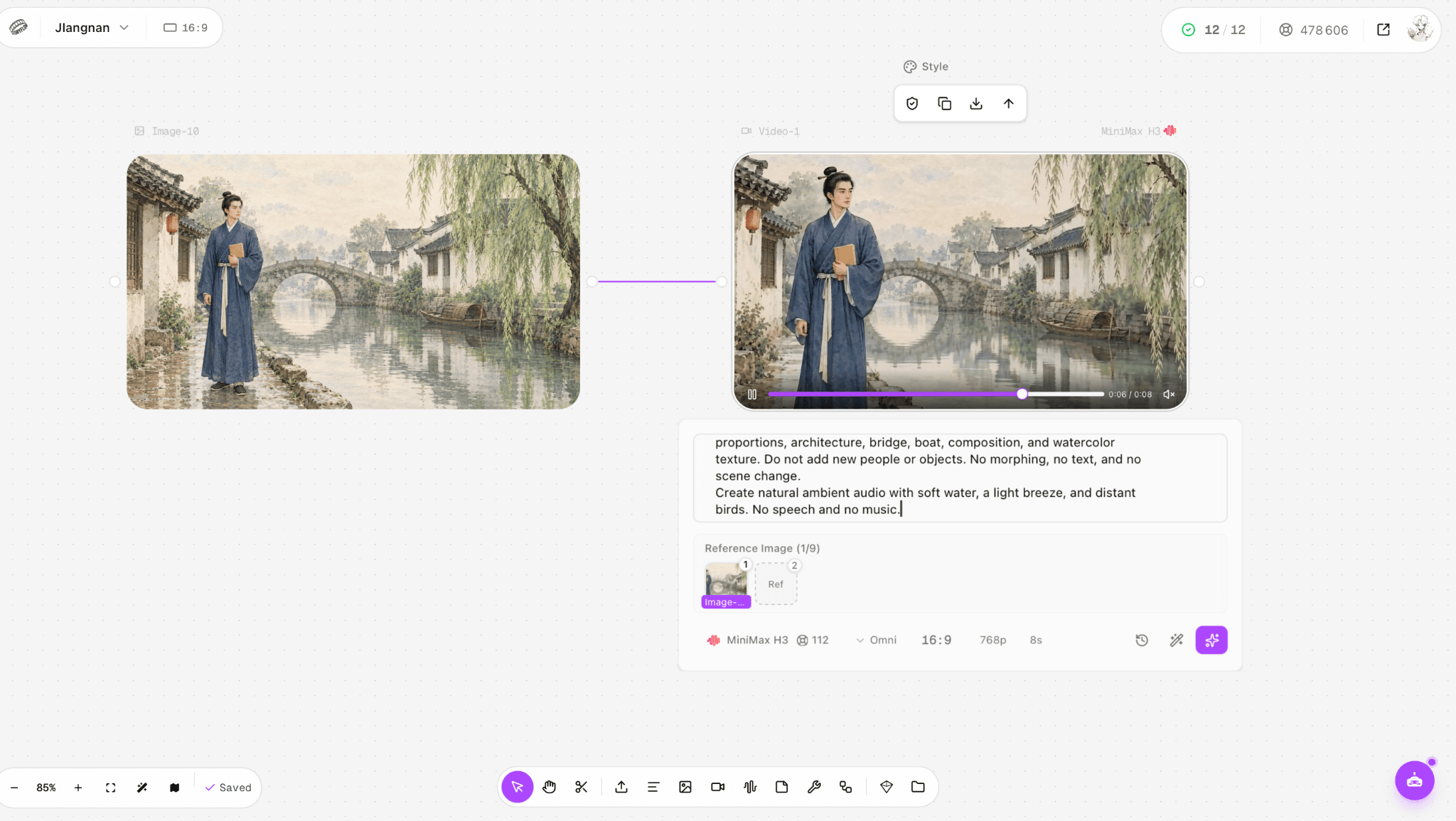
Figure 1. The completed Video-1 node and source frame used by the project owner.
Watch the original Video-1 with its audio
Video-1 retained the illustrated scene without obvious deformation according to the tester, but motion felt restrained and imperfectly natural. They also heard ambience and a distracting sigh. Its prompt requested soft breathing and prohibited speech and music, but did not prohibit audible breath. This is an unwanted editorial result, not proof of breaking that prompt.
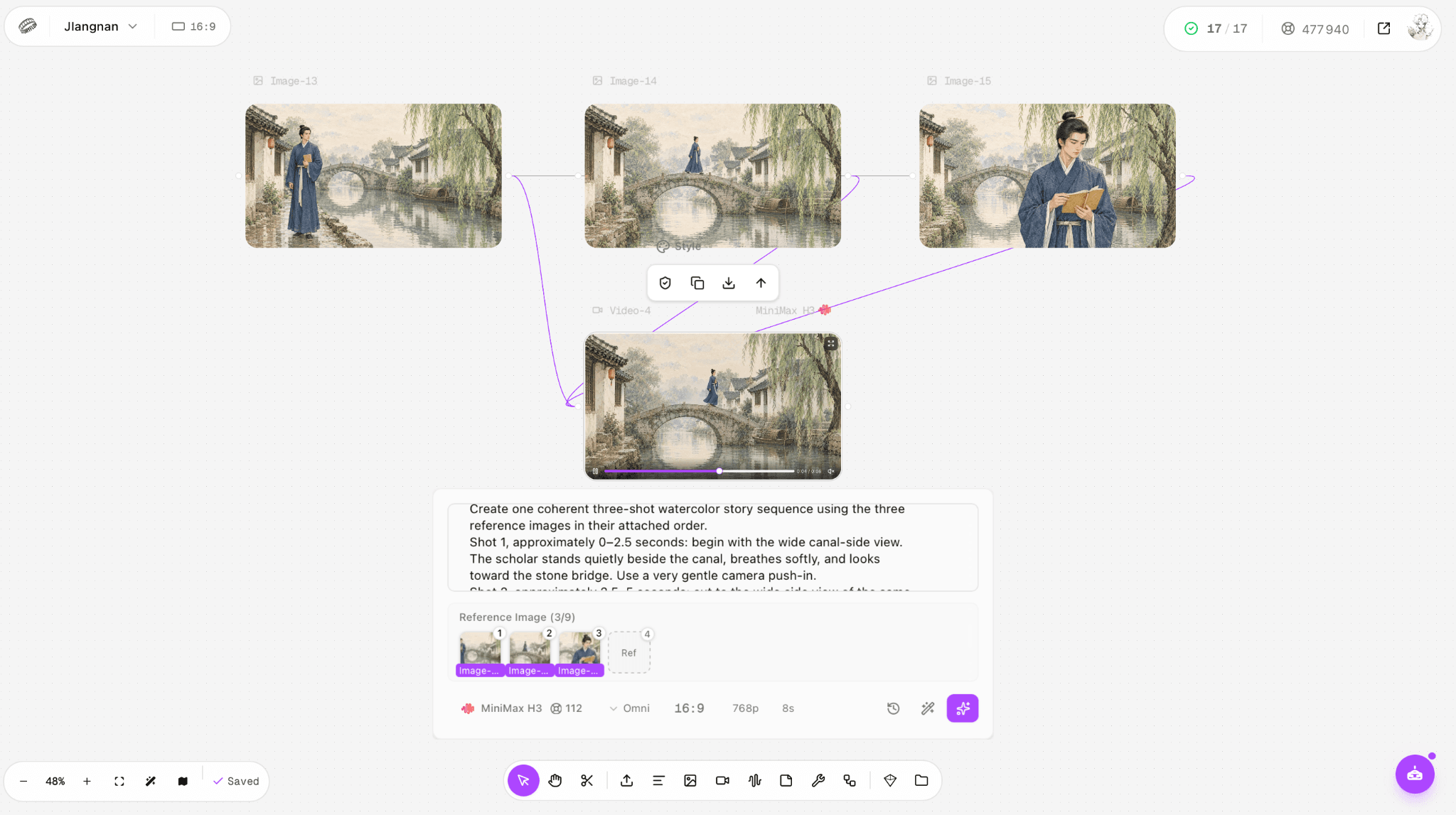
Figure 2. Video-4 and the three source images used for the distinct ordered-reference generation.
Watch the original Video-4 with its audio
Video-4 produced the intended three scenes and was reported to move more naturally without obvious deformation. Its prompt explicitly banned sighing, yet the tester still heard a sigh. The different reference pack and shot plan prevent treating it as an isolated audio-prompt experiment. No remedial rerun or precise sigh timecode was recorded.
Who should try H3, and what editing remains?
For short illustrated sequences with approved source images, these hosted cases support trying H3 as a source of candidate footage. Budget for reviewing each transition, trimming the clip and replacing an unsuitable soundtrack. The evidence does not support a promise of precise background movement, clean ambience on every attempt or release-ready output with no editing.
Stay with a working local or hosted alternative when its established style and timing already pass review. Moving to H3 makes sense when its reference workflow solves a demonstrated problem enough to offset new prompts, input preparation and reruns. For a creator who cannot wait for local inference, a hosted service removes hardware management but introduces per-job charges and service queues.
FAQ
Does Reddit prove H3 generates in 30 seconds?
No. In R1, thirty seconds is the video length; the author reported 15:49 generation time on an RTX 5090. [R1]
Can a 6GB GPU produce a forty-second result?
One poster reports doing so by generating and joining shots, at about 107 minutes for the stated setup. That is neither a speed guarantee nor a public-API limit. [R4]
Does H3 always create unwanted breathing?
These two different hosted tasks cannot establish a frequency. One original prompt prohibited sighs and one did not; review the soundtrack rather than generalizing from the pair.
Original prompts for the two hosted cases
The following inputs are reproduced as confirmed by the project owner. They are not suggested rewrites and are not the prompts used in the Reddit posts.
Video-1
Animate this exact watercolor scene as a quiet opening shot. The scholar stays in the same position, breathes softly and blinks once. His robe hem and the willow branches move gently in a light breeze. Add subtle ripples on the canal and make the wooden boat rock slightly. Use a very slow, smooth camera push-in.
Preserve the scholar’s face, hairstyle, blue robe, ochre book, body proportions, architecture, bridge, boat, composition, and watercolor texture. Do not add new people or objects. No morphing, no text, and no scene change.
Create natural ambient audio with soft water, a light breeze, and distant birds. No speech and no music.
Video-4
Create one coherent three-shot watercolor story sequence using the three reference images in their attached order.
Shot 1, approximately 0–2.5 seconds: begin with the wide canal-side view. The scholar stands quietly beside the canal, breathes softly, and looks toward the stone bridge. Use a very gentle camera push-in.
Shot 2, approximately 2.5–5 seconds: cut to the wide side view of the same scholar walking slowly across the stone bridge. His robe hem moves subtly in the breeze.
Shot 3, approximately 5–8 seconds: cut to the medium close-up beneath the willow tree. The same scholar gently opens the ochre-yellow book, looks down at the page, and blinks once.
Preserve the same character identity, face, hairstyle, wooden hairpin, indigo robe, ivory sash, ochre book, architecture, canal, bridge, lighting, restrained colors, warm paper grain, ink outlines, and watercolor texture across all three shots.
Use clean cinematic cuts between shots. Do not morph one composition into another. Do not add people, objects, text, captions, logos, or modern elements.
Create soft natural ambient audio with quiet canal water, a light breeze, and distant birds. No human breathing sound, no sighing, no speech, and no music.
Sources
Official specifications and prices checked September 27, 2026. Community statements are attributed reports; hosted observations come from the project owner.
1. Official H3 modes and hosted specifications
R1. Community 30-second Seedance/H3 comparison
R3. Local H3 and LTX comparison discussion
R4. Community multi-shot long-video workflow
Ready to try it on the canvas?
Open Astorie and fan your prompt across every frontier model in one workflow.