
10 Best Synthesia Alternatives in 2026 for AI Avatar Videos
HeyGen is the closest general-purpose alternative for marketing teams that want avatars, translation, and faster social production; Colossyan is the stronger switch for learning teams that need branching, quizzes, and course-centered workflows. Synthesia still has a distinctive enterprise stack around approved avatars, templates, localization, governance, and repeatable training production, so no single alternative is automatically better for every organization.
This ranking separates four jobs: learning and development, general marketing, enterprise governance, and interactive avatar experiences. It also distinguishes evidence captured in the supplied accounts from official product claims; it does not pretend all ten products were run through a controlled test.
Quick answer
Need | Best starting point | Limitation it solves | Main trade-off |
General marketing and localization | HeyGen | Faster campaign, avatar, and translation workflows | Less training-specific governance than Synthesia |
L&D and interactive courses | Colossyan | Branching, quizzes, and learner-centered scenes | Smaller general creative ecosystem |
Enterprise avatar governance | Keep Synthesia or compare AI Studios | Approved templates, teams, and scalable localization | Migration may disrupt governance and asset libraries |
Document/PPT-to-training video | Elai | Course conversion and interactive presentations | Less broad marketing-production depth |
Real-time conversational agents | D-ID or Tavus | Two-way, API-led avatar experiences | Different job from scripted video production |
Editor-first social production | VEED | Captions, editing, recording, and delivery in one surface | Avatar depth is not the only product priority |
Synthesia alternatives at a glance
Alternative | Type / scope | Best for | Switch trigger |
HeyGen | Avatar platform | Marketing + localization | You need rapid campaigns and translation |
Colossyan | L&D avatar platform | Interactive training | Branching or quizzes are required |
AI Studios | Avatar platform | Broad avatar formats | You want stock, custom, photo, or interactive avatars |
Elai | L&D video platform | PPT/document conversion | Source content should become a course quickly |
Hour One | Avatar video platform | Template-led business video | Your team wants agent/template assistance |
D-ID | Avatar + agent APIs | Photo avatars and agents | You need API or real-time interaction |
VEED | Video editor + AI | Editor-first social video | Subtitles and finishing are the bottleneck |
Creatify | Ad-creative platform | Performance marketing | URL/product inputs should become ads |
Tavus | Conversational video API | Real-time personalized agents | A two-way digital human is the product |
Astorie | Multi-model workflow layer | Generative b-roll orchestration | You need collaboration, not a full avatar replacement |
Alternative | Gain | Loss vs Synthesia | Pricing / access |
HeyGen | Marketing speed, translation, LiveAvatar/API options | Synthesia’s training governance depth | Free/paid plans; limits vary by region |
Colossyan | Branching, quizzes, L&D focus | Less general creative tooling | Free trial and paid/enterprise access |
AI Studios | Wide avatar and language options | Different governance and template ecosystem | Free, Personal, Team, Enterprise |
Elai | PPT, article, interactivity, course workflows | Smaller avatar/ecosystem breadth | Trial and paid/enterprise plans |
Hour One | Business templates and assisted creation | Fewer specialized interactive-learning controls | Free entry and paid plans; verify current quotas |
D-ID | Photo avatars, APIs, visual agents | Not a direct training authoring replacement | Studio/API tiers; credits vary |
VEED | Editing, subtitles, recording, social delivery | Less avatar-platform specialization | Free and paid editor plans |
Creatify | Fast ad variants from product inputs | Not designed for structured learning | Trial/credit plans; commercial terms vary |
Tavus | Real-time conversational video | Not a scene-based course builder | Developer/enterprise pricing |
Astorie | Shared node canvas and multi-model b-roll | No approved-avatar or LMS stack | Workspace/model costs vary |
Capability matrix
Alternative | SCORM / LMS | Localization | Custom avatar | API | Interactive | Main loss |
HeyGen | No native SCORM focus | Strong | Yes | Yes | LiveAvatar/API | Training governance |
Colossyan | L&D/LMS focus | Strong | Yes | Enterprise/API options | Branching + quizzes | Broad creative suite |
AI Studios | LMS/embed options | Strong | Yes | API options | Interactive avatars | Synthesia asset continuity |
Elai | Course/LMS focus | Strong | Yes | API | Interactive slides | General campaign depth |
Hour One | Business delivery | Yes | Yes | Enterprise options | Limited/verify | Training interactivity |
D-ID | Embed/API | 120+ languages | Yes | Strong | Real-time agents | Course authoring |
VEED | No SCORM focus | Subtitles/dubbing | Avatar tools | Video APIs | Limited/verify | Avatar governance |
Creatify | No SCORM focus | Ad localization | UGC avatars | API/scale options | No course focus | L&D controls |
Tavus | Embed/API | Agent-dependent | Replica | Strong | Core strength | Scripted training suite |
Astorie | No | Model-dependent | No native avatar stack | Workflow-dependent | No | Avatar/LMS/governance |
How the ranking was built
The ranking measures replacement fit, not raw feature count. HeyGen and Colossyan lead because they cover the largest share of the core scripted-avatar job for their target users. The supplied images provide dated interface evidence for HeyGen, AI Studios, and VEED. Other claims are limited to official product pages checked on the date above. No output-quality percentages, render-speed claims, or user-satisfaction scores were invented.
What do you lose when switching from Synthesia?
A Synthesia workspace can accumulate more than videos: approved templates, branded scenes, custom avatars, pronunciation rules, voice choices, translation processes, shared projects, review conventions, governance controls, and LMS publishing routines. These assets are rarely portable as a complete system. Recreating them can cost more than a lower monthly subscription saves.
Before migration, inventory every template, avatar permission, voice rule, terminology list, locale, owner, approval step, API integration, and course export. Then run one representative production from script through localization, review, and delivery. A successful demo is not enough if the new platform breaks governance or forces manual rework at scale.
1. HeyGen — Best for marketing, localization, and rapid avatar production
Switch when your main job is producing campaign, sales, or social videos quickly across languages rather than managing a formal training estate. You gain a broad avatar workflow, video translation, voice options, developer access, and real-time avatar products. The main trade-off is a migration away from Synthesia’s established training templates, approvals, and governance patterns.
Where it fits—and where it does not
HeyGen is the most balanced direct alternative for general-purpose avatar video. It is especially relevant for marketing localization and fast iteration, but enterprise buyers should compare permissions, brand controls, consent processes, and localization QA—not just avatar realism.
Pricing and access
HeyGen offers free entry in eligible regions plus paid creator and team options. Exact free-video allowances and paid prices can vary by region and billing surface.
Evidence note
The supplied account showed paid upgrade options after creation. The images document access and workflow only; they do not prove a controlled quality advantage over Synthesia.
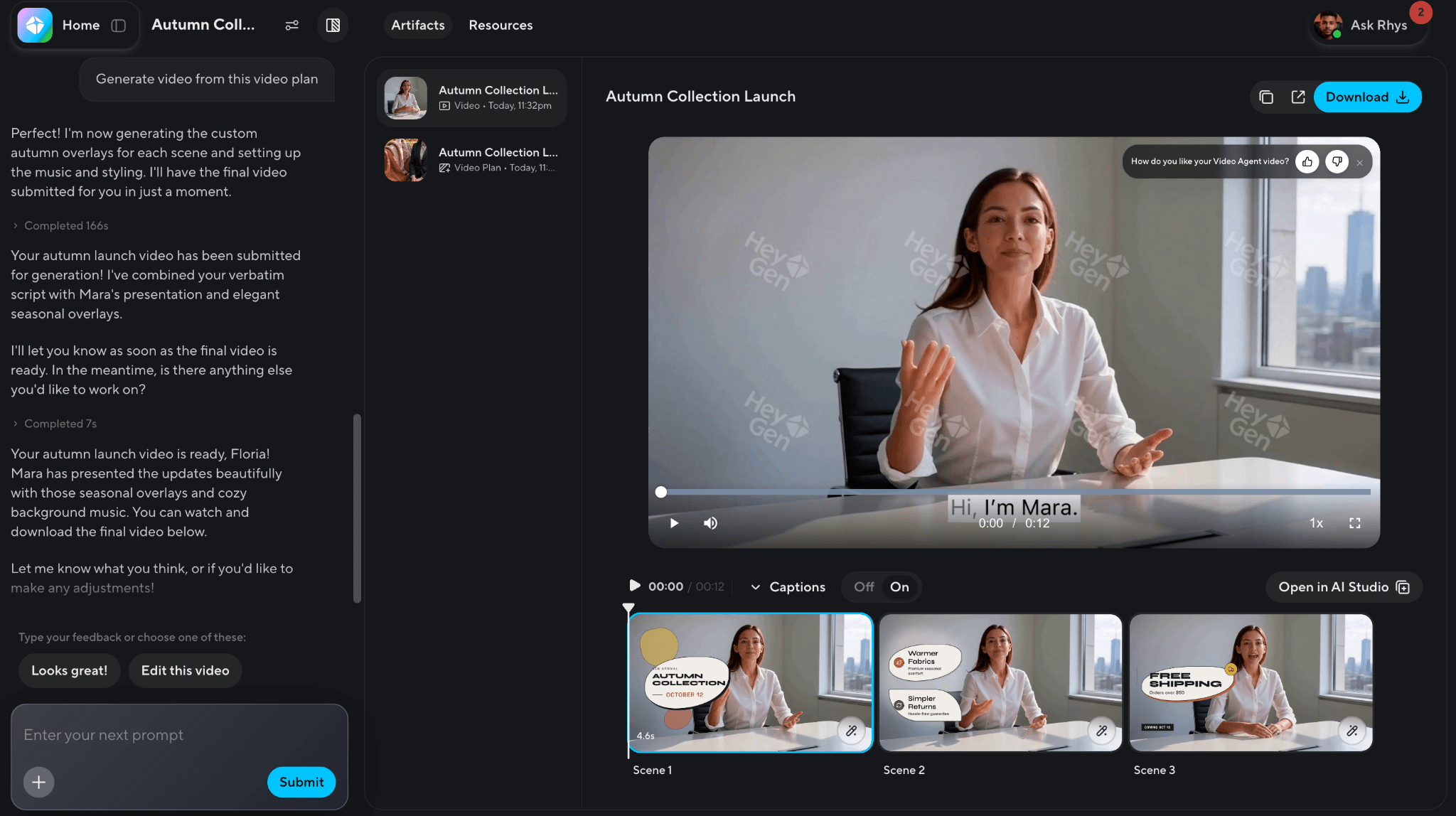
Figure 1. Supplied HeyGen avatar workflow with scenes, script, and presenter controls.
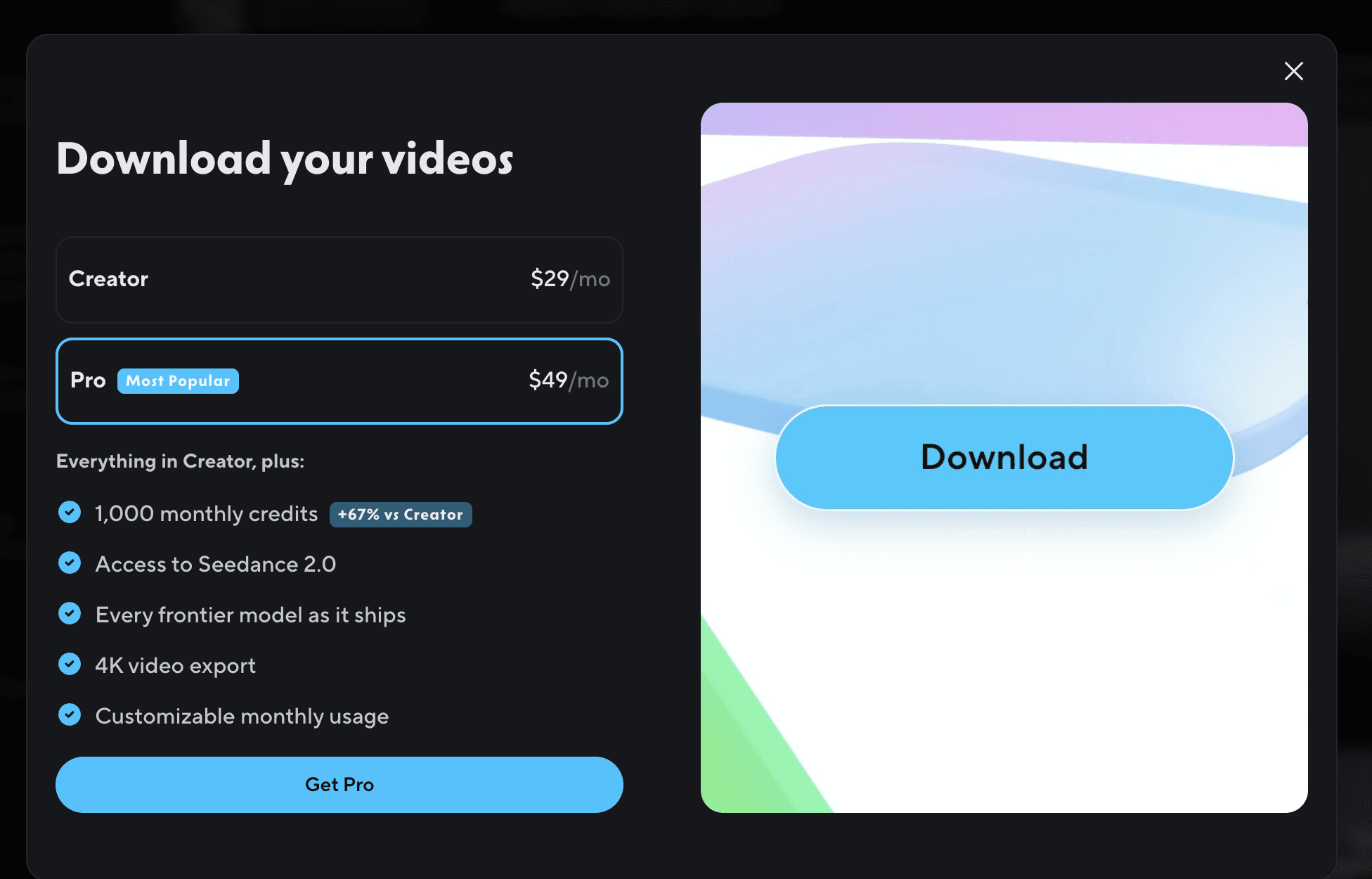
Figure 2. HeyGen upgrade options captured in the supplied account; current pricing may differ by region or billing cycle.
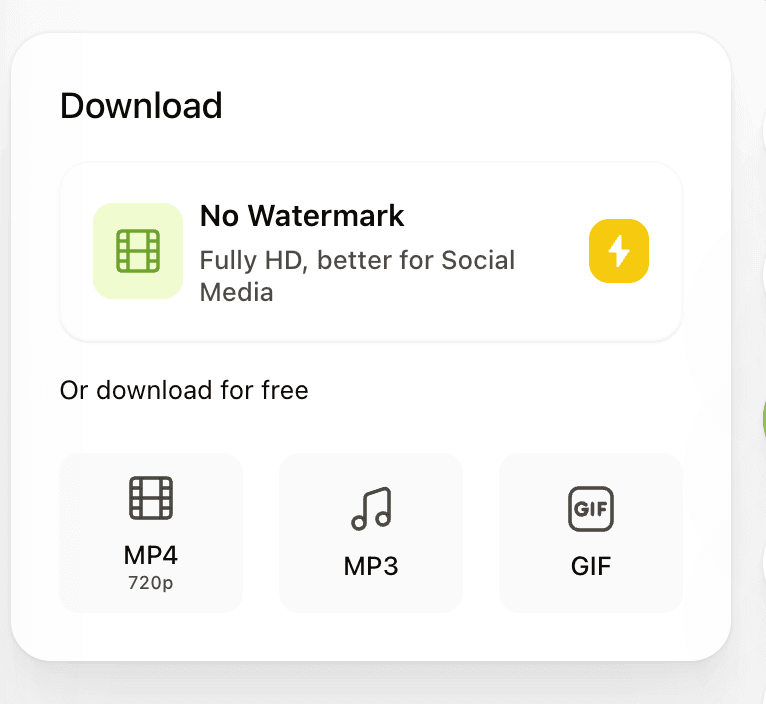
Figure 3. HeyGen export panel showing free and paid download constraints in the supplied account.
2. Colossyan — Best for interactive learning and development
Switch when branching scenarios, quizzes, and training-specific interaction are central requirements. You gain an L&D-centered authoring experience with branching, knowledge checks, and learner choices. The main trade-off is less emphasis on broad social-video editing and the need to rebuild Synthesia templates, voices, and governance.
Where it fits—and where it does not
Colossyan is the most purposeful switch for interactive training. Its official interactive-video product supports buttons, quizzes, and branching. Validate SCORM/LMS delivery, analytics, accessibility, and the exact plan needed for your course workflow before migrating.
Pricing and access
Access includes trial and paid business/enterprise paths. Interactive, collaboration, and integration entitlements can be plan-specific.
3. AI Studios — Best for broad avatar formats and business video
Switch when you want stock, photo, product, custom, or interactive avatars under one vendor and can rebuild your Synthesia production rules. You gain a wide avatar catalog, localization features, dubbing, and multiple avatar modes. The main trade-off is different template, approval, and governance conventions from an existing Synthesia workspace.
Where it fits—and where it does not
AI Studios is a broad direct competitor for business video rather than a narrow ad tool. Compare avatar consent, team permissions, translation review, API coverage, and export entitlements on the exact plan you need.
Pricing and access
The official pricing surface includes Free, Personal, Team, and Enterprise options. Prices, included credits, and avatar entitlements should be verified live.
Evidence note
The preserved screenshot documents a dated pricing view, not a permanent price guarantee.
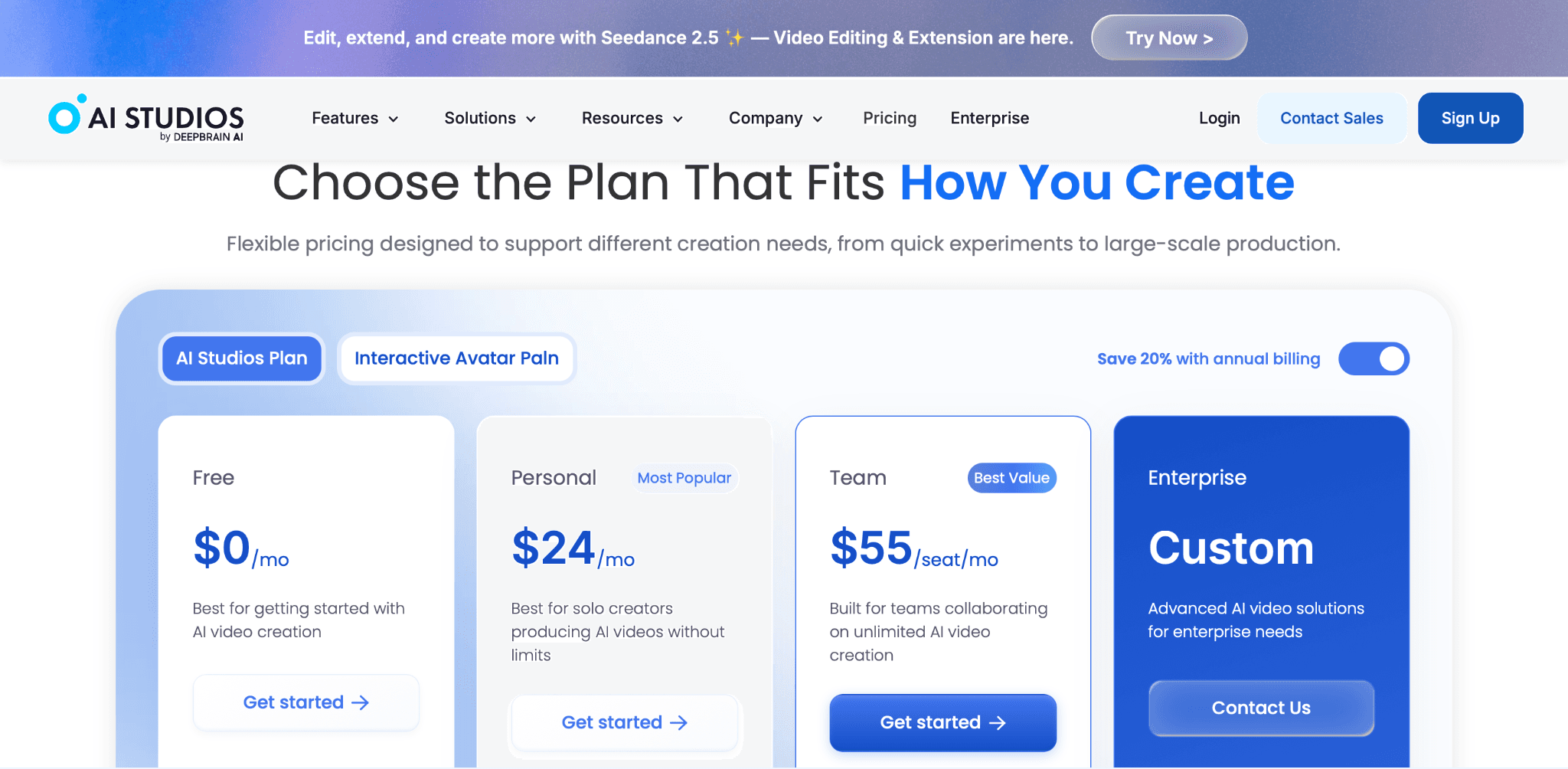
Figure 4. AI Studios plan comparison captured in the supplied draft.
4. Elai — Best for PPT, document, and course conversion
Switch when source material already lives in slides, articles, or training documents and conversion speed matters more than a large general-purpose editor. You gain PPTX-to-video, article-to-video, interactive presentations, avatar dialogs, translation, and L&D-oriented storyboarding. The main trade-off is less breadth for social-first creative production and the cost of rebuilding enterprise standards.
Where it fits—and where it does not
Elai, now part of Panopto, is a credible course-production alternative. It is best evaluated as an L&D workflow: confirm how imported decks remain editable, how interactivity exports, and how analytics or LMS integrations fit your stack.
Pricing and access
Elai offers trial access and paid or enterprise plans. Feature availability, limits, and Panopto packaging may change, so verify on the official page.
5. Hour One — Best for template-led business communication
Switch when your team values guided creation, reusable business templates, and a simpler script-to-video process. You gain assisted video creation and a template-first browser workflow. The main trade-off is less specialized depth for interactive courses or real-time agents than category leaders.
Where it fits—and where it does not
Hour One can replace routine internal updates, explainers, and presenter-led business content. It is not automatically the best choice for organizations whose decision depends on SCORM, branching, or live conversational avatars.
Pricing and access
A free entry point and paid business access may be available; verify current quotas, resolution, watermark, commercial terms, and collaboration rights on the live plan page.
6. D-ID — Best for photo avatars, developer APIs, and visual agents
Switch when you need to animate images or embed a real-time conversational digital human rather than build conventional scene-based training videos. You gain photo and video avatars, asynchronous video APIs, translation, and real-time visual agents. The main trade-off is a different authoring model with less emphasis on full course templates and Synthesia-style training governance.
Where it fits—and where it does not
D-ID solves two adjacent jobs: generated avatar video and interactive visual agents. It is a strong technical option when an API or embeddable experience is required, but it should not be compared to Synthesia only on presenter appearance.
Pricing and access
D-ID offers Studio and API access with credit- and plan-dependent limits. Official documentation states that output resolution depends on presenter and plan; current rights and limits should be confirmed before production.
7. VEED — Best for editing, captions, recording, and social delivery
Switch when the hard part is finishing and publishing the video—not building a governed library of enterprise avatars. You gain a full browser editor with subtitles, recording, translation, brand tools, and AI generation in the same surface. The main trade-off is less specialization as an enterprise avatar-training platform.
Where it fits—and where it does not
VEED is an editor-first alternative. It can reduce handoffs for social explainers and internal communications, but organizations needing governed avatar catalogs, formal training templates, or deep interactivity should compare a dedicated avatar platform first.
Pricing and access
VEED provides free and paid editor plans. AI usage, exports, resolution, watermark removal, and team controls are plan-dependent.
Evidence note
The screenshot confirms an editor with scene and subtitle controls in the supplied account. It is not evidence of Synthesia feature parity.
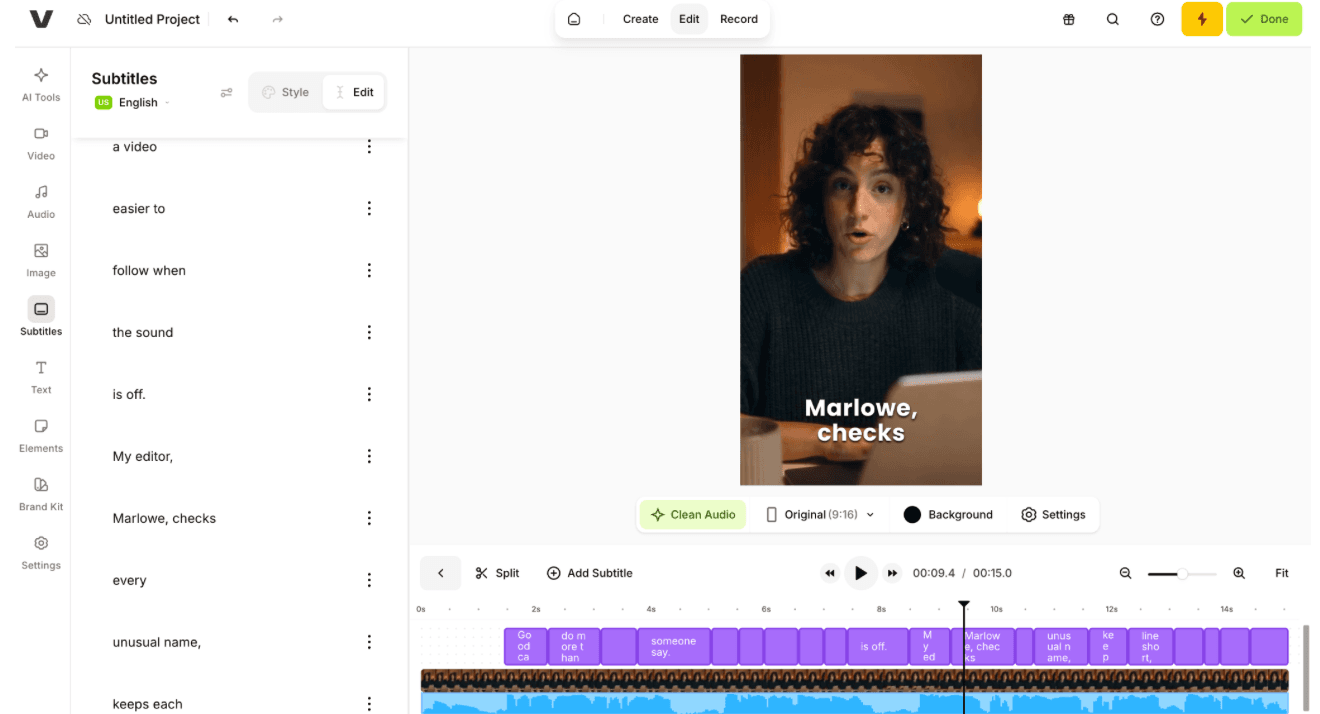
Figure 5. VEED editor with subtitle and timeline controls, preserved from the original draft.
8. Creatify — Best for performance ads from product inputs
Switch when your primary output is short-form product advertising and you want to turn URLs or product information into multiple creative variants. You gain ad-specific scripting, UGC-style formats, and fast variation for performance marketing. The main trade-off is limited fit for structured learning, enterprise training governance, and long-form internal communication.
Where it fits—and where it does not
Creatify is an adjacent alternative, not a full Synthesia replacement. It earns a place for marketing teams whose core job is ad throughput. Training teams should prefer HeyGen, Colossyan, AI Studios, or Elai.
Pricing and access
Creatify uses free/trial and credit-based paid access. Check current export rights, watermark policy, avatar permissions, and commercial-use terms before campaigns.
9. Tavus — Best for real-time personalized conversational video
Switch when a two-way digital human that can respond in real time is the product requirement. You gain developer-focused conversational video, replicas, and embeddable real-time experiences. The main trade-off is it does not replace a scene-based training studio, template library, or conventional asynchronous localization workflow.
Where it fits—and where it does not
Tavus belongs in this list for interactive customer, sales, onboarding, and coaching experiences. Compare latency, safety controls, knowledge integration, session analytics, consent, and failover—not just avatar fidelity.
Pricing and access
Developer and enterprise access is usage- and contract-dependent. Verify current concurrency, minute pricing, regions, and commercial terms on the official site.
10. Astorie — Best for multi-model b-roll and collaborative creative workflows
Switch when your avatar scenes are only one part of a larger production and the bottleneck is coordinating image, video, copy, and review nodes. You gain a shared node canvas for orchestrating multiple creative models and assets. The main trade-off is Astorie does not provide Synthesia’s approved avatar library, custom-avatar governance, voice rules, SCORM/LMS delivery, or enterprise training stack.
Where it fits—and where it does not
Astorie is only a partial alternative for teams using generative b-roll or mixed-media explainers. Keep a dedicated avatar platform when a consistent presenter, localization governance, or course delivery is essential.
Pricing and access
Workspace access and model usage depend on the current Astorie configuration; verify available models, credits, and team entitlements before adopting it.
How to choose a Synthesia alternative
Name the job: L&D course, marketing campaign, internal update, sales personalization, or real-time agent.
Create a requirements matrix for SCORM/LMS, localization, custom avatars, API, interactivity, accessibility, governance, and approvals.
Migrate one representative project, including pronunciation, translations, review, export, analytics, and downstream publishing.
Check legal and operational boundaries: avatar consent, voice rights, data processing, watermark policy, commercial rights, and regional availability.
Estimate rebuild cost for templates, avatar permissions, terminology, integrations, and team training before changing vendors.
When should you keep Synthesia?
Keep Synthesia when its approved template library, custom avatars, pronunciation rules, localization process, shared governance, and delivery integrations already work at scale. A switch is justified when a specific missing capability—such as interactive branching, real-time agents, editor-first finishing, or ad automation—creates a measurable bottleneck.
FAQ
What is the best direct Synthesia alternative?
HeyGen is the best general-purpose starting point for marketing and localization; Colossyan is the stronger choice for interactive L&D.
Which alternative is best for SCORM or LMS training?
Start with Colossyan or Elai, then verify the exact export, analytics, and LMS integration required by your organization.
Which tools support real-time conversational avatars?
D-ID and Tavus are the clearest choices in this ranking. They solve a different job from scripted scene-based video.
Can Astorie replace Synthesia?
Only partially. Astorie can coordinate multi-model b-roll and collaborative workflows, but it is not an approved-avatar, localization-governance, or LMS platform.
Final verdict
Choose HeyGen for broad marketing and localization, Colossyan for interactive learning, AI Studios for avatar breadth, Elai for document-to-course workflows, D-ID or Tavus for real-time agents, and VEED when editing and distribution dominate. Keep Synthesia when its governance and reusable production system are the asset. Astorie is valuable only as an adjacent multi-model workflow layer, not as a full avatar-platform replacement.
Related reading
Runway Gen4 vs Veo vs Kling: Practical Video Production Comparison
Practical comparison for AI video production choices across Runway Gen4, Google Veo, and Kling.
7 Best Photoroom Alternatives in 2026 (Tested for Ecommerce Photography)
Do you need a Photoroom alternative that goes beyond simple background cutouts and batch image processing? Try these 7 tools and pick the one that best matches your AI product photography use cases.
6 Ideogram Alternatives for Killer AI Image Generation
Here are 6 tried and tested Ideogram alternatives that work best for prompt accuracy, text, image realism, character consistency and are intelligent enough to render real-world scenarios and logic.
Ready to try it on the canvas?
Open Astorie and fan your prompt across every frontier model in one workflow.