

MiniMax H3 in Astorie vs LTX Studio Workflow Comparison
For MiniMax H3 vs LTX 2.5, separate the model decision from the workspace decision: H3 offers mixed-reference video at 768p or 2K, while LTX-2.5 Fast and Pro provide different duration, resolution and price combinations. In the supplied project, Astorie kept an existing H3 source branch together; LTX Studio provided separate generation, storyboard and editing spaces. This article compares those working paths and the official model specifications, without ranking video quality from different scenes.
If approved illustrations and comparison branches already live in Astorie, keeping H3 there avoids rebuilding those links. If planning and assembling scenes is the bigger task, LTX Studio is another route to evaluate. Start with the workspace where your approved assets reside, then check whether the underlying model can meet the next shot’s requirements.
MiniMax H3 vs LTX 2.5 at the model level
Public API question | MiniMax H3 | LTX-2.5 Fast | LTX-2.5 Pro |
Models | MiniMax-H3 | ltx-2-5-fast | ltx-2-5-pro |
Video output | 768p or 2K | 720p to 4K | 720p to 4K |
Text and image to video | Supported | Supported | Supported |
Available reference-style routes | Mixed image, video and audio reference entry | Image-to-video and audio-to-video endpoints | Image-to-video and audio-to-video endpoints |
Duration in T2V/I2V | 4–15s, integer | 6–20s at 720p/1080p, 24/25fps; at higher fps or resolution 6–10s | 6–10s for listed resolutions/fps |
Audio | Native sound described | Can generate audio; silent switch documented | Can generate audio; silent switch documented |
The LTX matrix is its API specification, not a guarantee that every Studio plan or interface exposes all durations. LTX-2.5 Fast supports 6, 8, 10, 12, 14, 16, 18 or 20 seconds at 720p/1080p and 24/25 fps; Pro’s published table lists 6, 8 or 10 seconds. Both LTX variants expose camera_motion, a last-frame field on eligible routes and generate_audio:false. The API table marks retake and extend unavailable for LTX-2.5 itself, even though a Studio workspace or older LTX model may offer editing tools. MiniMax’s H3 first/last-frame and mixed-reference modes are distinct. [2, 3]
Which model controls fit the shot?
H3’s mixed-reference route suits a request built around several kinds of evidence—for example, a character image plus movement and audio references. Choose its first/last-frame route instead when the opening or ending image is the anchor. A reference is guidance, not a guarantee that an exact frame will appear. The actual Astorie test used one still in a Reference Image area, not an inspected API payload. [3]
LTX-2.5 exposes camera_motion and an audio-generation switch, and its image/audio routes can accept a last frame under their documented conditions. For a fifteen-to-twenty-second shot, Fast at 720p or 1080p and 24/25 fps fits the published duration matrix; Pro does not provide that same long-duration range. For a 4K deliverable, both have a documented route, while the cited H3 API tops out at 2K. A larger output does not itself prove better texture or motion. [2, 3]
Do not choose a model for a tool that belongs to the surrounding application. LTX Studio can expose edit actions while the LTX-2.5 API matrix marks retake and extend unavailable. Likewise, an Astorie graph can retain several models without making those models interchangeable. Confirm the specific operation and route, especially when continuing an existing shot. [1, 2]
What did the two supplied workflows actually show?
Test field | H3 in Astorie | LTX Studio colleague test |
Source | One Jiangnan watercolor still | Different dramatic boat/woman material |
Video model | MiniMax H3 | LTX-2.5 Fast |
Displayed settings | Omni, 16:9, 768p, 8s | 16:9, 1080p, 6s; Focus Shift preset shown |
Generation evidence | One successful 112-credit debit; original MP4 linked | One six-second watermarked result in screenshots |
Audio evidence | Tester reported ambience and an unwanted sigh | Playback control visible; exported audio content not evaluated |
The project owner supplied the H3 run; a colleague supplied the earlier LTX Studio screenshots and notes. The H3 file is eight seconds at 1344 × 768 with an audio stream; the tester reported restrained, imperfectly natural movement, ambience and an unwanted sigh. The colleague’s screenshots establish a six-second 1080p LTX-2.5 Fast result, a watermark and the camera selector. They do not establish the quality of its soundtrack.
These examples use different scenes, prompts, durations and settings. Only the style and color excerpt of the original LTX prompt could be verified from the screenshot; the example prompt below is not the recorded test input. Exact run dates and the LTX exported audio were unavailable. The comparison therefore describes workflow choices and observed outputs, without ranking the models’ visual quality, speed or reliability.
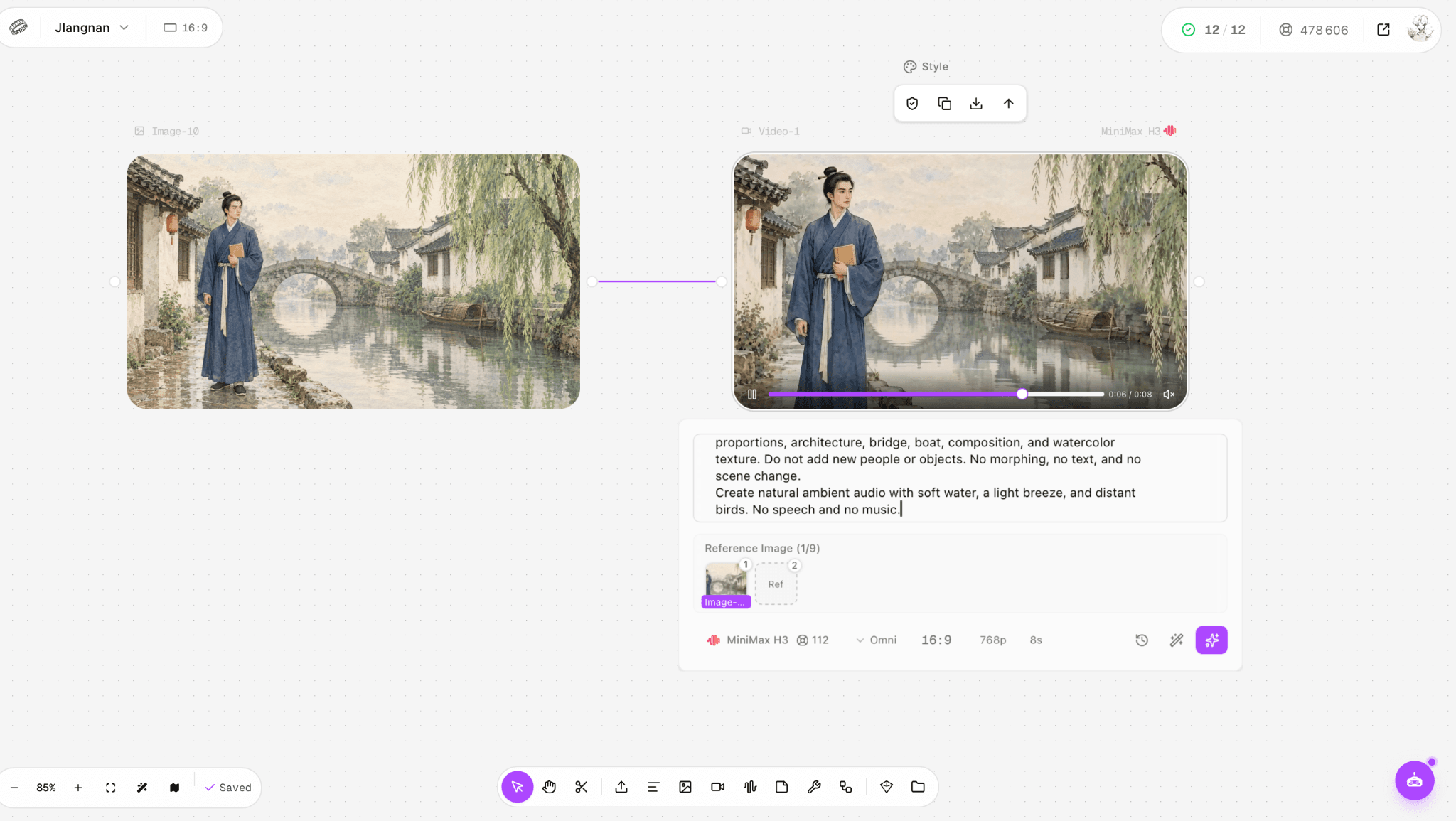
Figure 1. H3 source and completed node in Astorie: one still, eight-second 768p video and 112 deducted credits.
Watch the original H3 test clip and hear its soundtrack
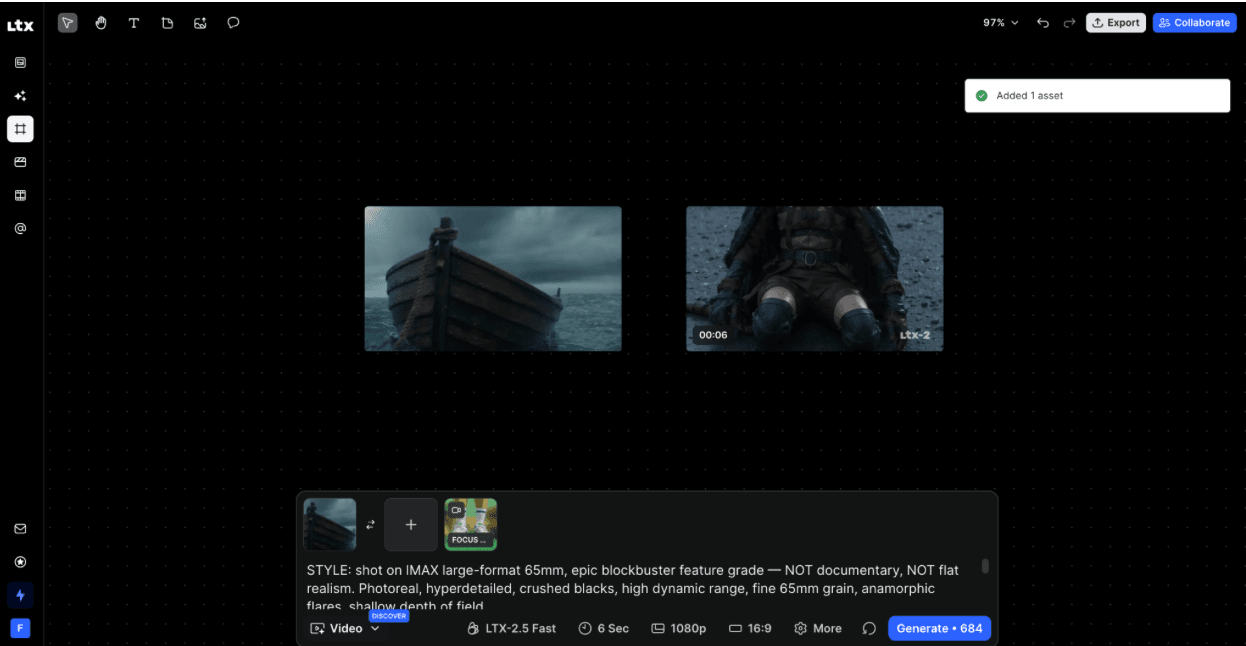
Figure 2. Earlier colleague test in LTX Studio using LTX-2.5 Fast, six seconds at 1080p and a separate cinematic source.
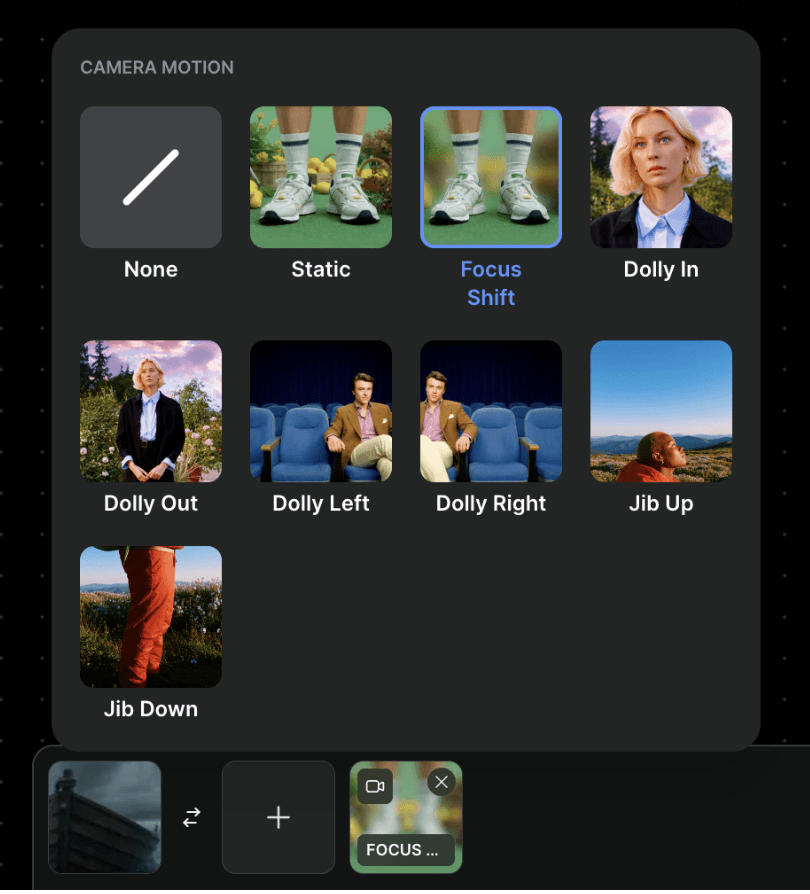
Figure 3. LTX Studio camera-motion selector with Focus Shift chosen in the recorded session.
Original prompt used in the LTX-2.5 Fast test
Create a cinematic scene of a young female warrior aboard a weathered wooden boat on a stormy sea. She wears dark leather armor, with wet hair blowing across her face. Begin with a low view of the boat’s bow cutting through the waves, then move toward a close-up of the warrior as she looks ahead with a tense, determined expression. Keep her face, clothing and the boat consistent throughout.
STYLE: shot on IMAX large-format 65mm, epic blockbuster feature grade — NOT documentary, NOT flat realism. Photoreal, hyperdetailed, crushed blacks, high dynamic range, fine 65mm grain, anamorphic flares, shallow depth of field.
COLOR: cold steel-blue and slate-grey storm palette — black thunderheads, granite-grey sea, near-monochrome teal darkness, heavy contrast.
Use natural boat movement, wind-driven hair and realistic water motion. Avoid facial distortion, extra limbs, flickering, text and logos.
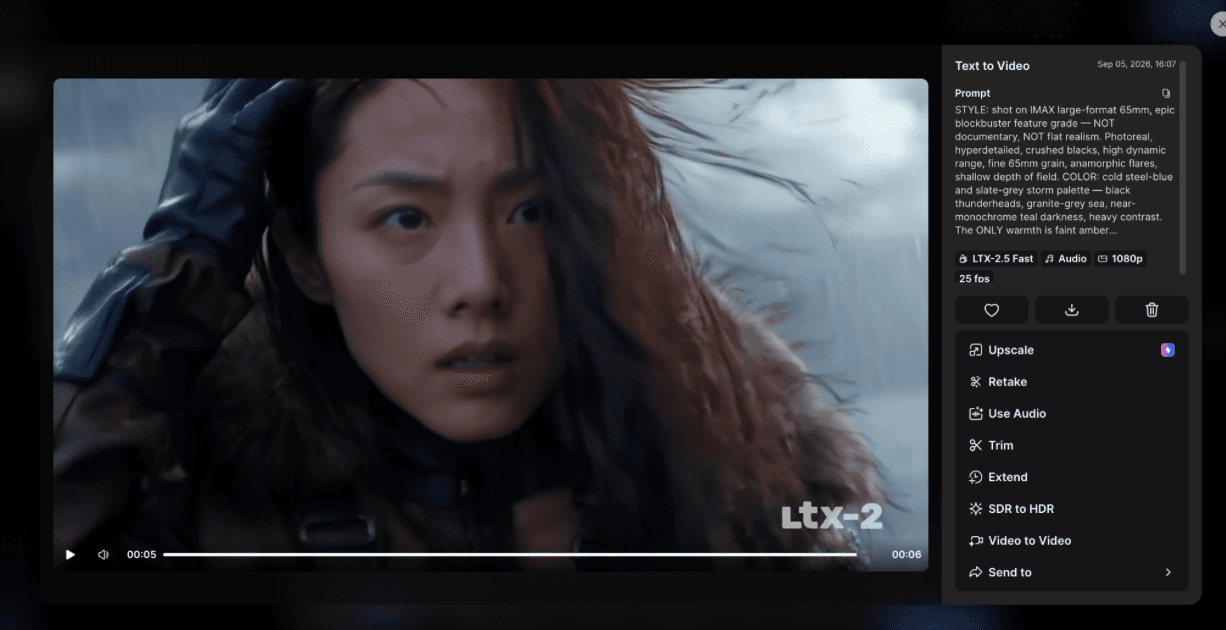
Figure 4. Watermarked LTX-2.5 Fast result shown in the colleague’s account; its soundtrack was not independently evaluated.
How does planning and finishing differ?
In the recorded Astorie path, the source image feeds a video node and remains visible next to the result. That is useful when the next decision is to revise the prompt or compare another branch while retaining the approved illustration. The test demonstrates generation and review on that canvas; it does not demonstrate a completed timeline edit or a measured time saving.
The LTX screenshots show Gen Space, Canvas, Storyboard, Video Editor and Elements, plus camera presets in the composer. The colleague described extra navigation when moving between planning and generation. These views establish available interface areas, not that a full film was assembled or that every listed action was exercised. A guided sequence can be attractive when scenes and shot organization matter more than keeping the current graph unchanged.
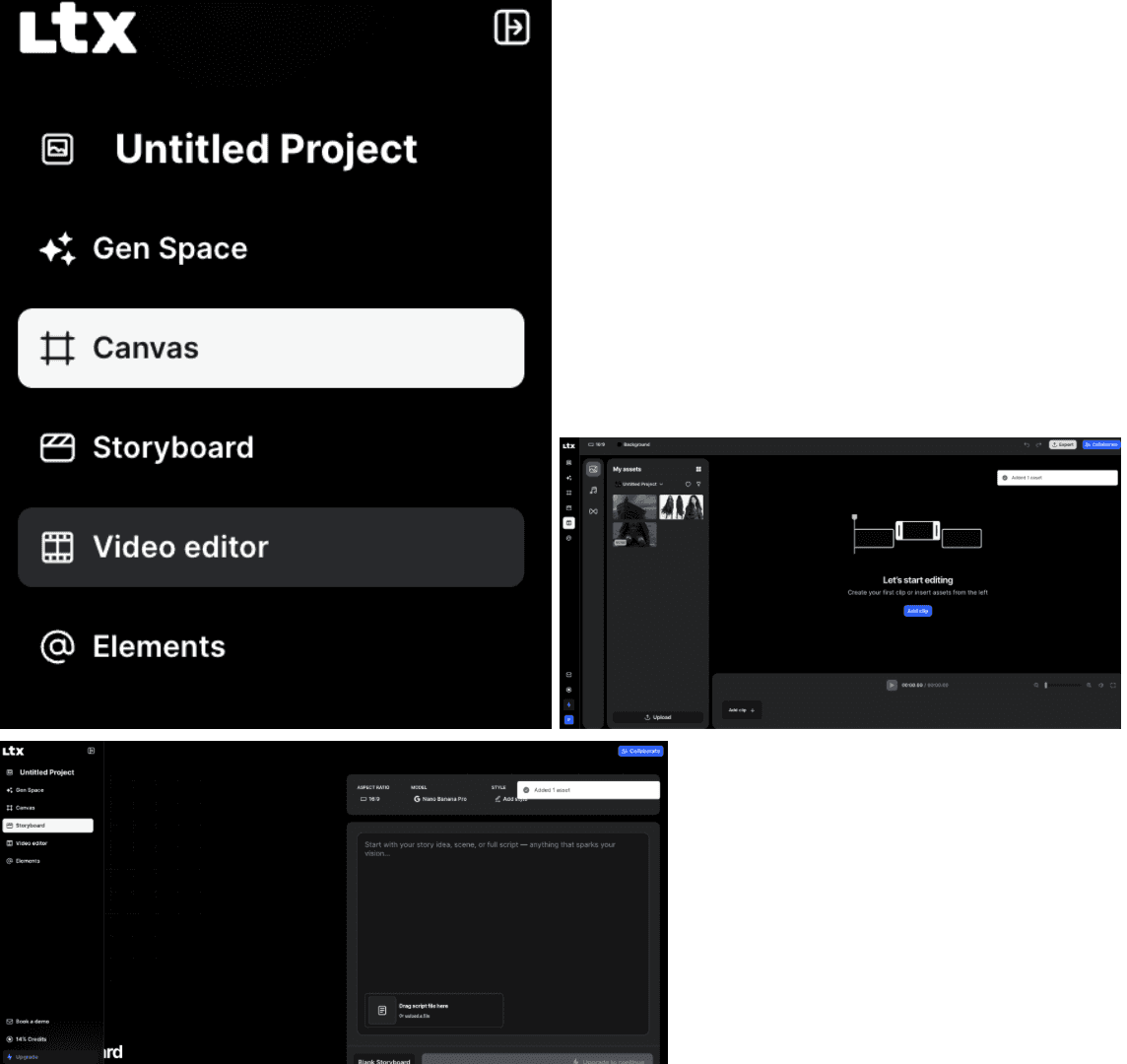
Figure 5. LTX Studio’s distinct production spaces, including storyboard and editing.
LTX Studio also advertises multiple models and Flows node automation. Astorie’s value here is continuity of this existing project, not exclusive ownership of nodes or multi-model work. If your LTX storyboard already contains approved scenes, those approvals and arrangements have value too. [1]
Compare API output prices separately from subscriptions
API video output | Per-second price | Eight seconds, output only |
H3 at 768p | $0.08 | $0.64 |
H3 at 2K | $0.13 | $1.04 |
LTX-2.5 Fast at 720p | $0.09 | $0.72 |
LTX-2.5 Fast at 1080p | $0.13 | $1.04 |
LTX-2.5 Pro at 720p | $0.12 | $0.96 |
LTX-2.5 Pro at 1080p | $0.17 | $1.36 |
The rows are provider API output charges, not Studio or Astorie subscriptions. They assume one request and no billable H3 input media. H3’s 768p is not LTX’s 720p; H3’s 2K label is not LTX’s 1080p. The table supports arithmetic, not a quality-adjusted winner. At 4K, LTX-2.5 Fast is $0.30 per second and Pro $0.39, or $2.40 and $3.12 for eight seconds of output. [4, 5]
What do the platform plans actually buy?
Platform route | Published plan or recorded cost | Important condition |
LTX Studio Free | 800 one-time credits | Personal use; not a monthly allowance |
LTX Studio Lite | 8,000 credits; $15 monthly | Commercial work is not the basis for choosing this entry tier |
LTX Studio Standard | 28,000 credits; $35 monthly or $28/month annually | Commercial license, AI storyboards and advanced Flows listed |
Astorie Standard annual | 1,600 monthly credits; first-year $12/month billed annually | Renewal listed at $16/month annually from year two |
Recorded H3 job in Astorie | 112 credits for 8s at 768p | One completed request; not an LTX-credit equivalent |
LTX’s Standard annual price totals $336 per year; Astorie’s cited first-year annual price totals $144. These buy different platforms and allowances, so comparing the monthly headline alone cannot identify the lower cost per approved clip. The LTX test screenshot also shows a generation quote, but its actual debit was not independently confirmed; it is not used as a verified billing benchmark. [1, 6]
The visible LTX watermark belongs to that earlier free-account result. It should not be generalized to every API output or paid plan. For paid publication, use the current plan’s commercial-use terms and the actual delivered export, rather than assuming that access to a generator also grants the needed rights.
When is moving the project worth the work?
Your next requirement | Path to evaluate | What the move costs |
Keep existing source and model branches linked | Continue H3 in the current Astorie project | Stay within H3’s hosted duration and output options |
Organize scenes through a guided storyboard and edit workspace | LTX Studio | Import sources; rebuild scene structure and approvals |
Up to 20s at 720p/1080p, 24/25fps | LTX-2.5 Fast API | New integration and model-specific prompt review |
Several reference media types for a short shot | H3 reference generation | Prepare media roles and review resulting continuity |
Stay with the current route when it already meets delivery requirements. Switch when a named requirement—duration, output size, reference combination or production organization—cannot be met efficiently there. For quality, use the same saved source and delivery brief in a future comparison; this pair of unmatched scenes supplies no reason to abandon an already approved result.
FAQ
Is LTX-2.5 Fast limited to six seconds?
No. Its API matrix permits up to 20 seconds at 720p or 1080p and 24/25 fps; Pro’s listed durations top out at 10 seconds. The colleague happened to render six. [2]
Does LTX Studio lack nodes or other video models?
No. Its current page advertises Flows and models beyond LTX-2.5; the comparison above describes what appeared in the earlier test, not exclusivity. [1]
Which model sounded better?
The LTX export was not assessed for sound, so this evidence cannot answer. H3’s example contained ambient audio and an unwanted sigh according to the project tester.
Sources
Official specifications and prices checked September 27, 2026. H3 observations are from the project owner; LTX screenshots and interface notes are from a colleague.
1. LTX Studio plans, rights and Flows
2. LTX-2.5 Fast and Pro technical matrix
5. MiniMax H3 API and input pricing
Ready to try it on the canvas?
Open Astorie and fan your prompt across every frontier model in one workflow.