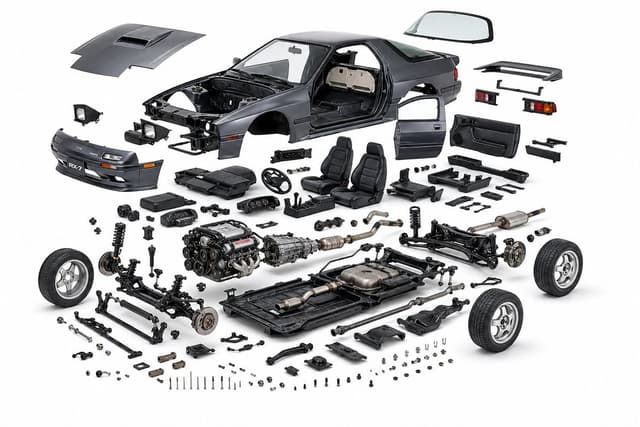
Explore a travel-poster example that brings architectural details into a graphic layout. Use its prompt as a starting point for deciding what your own visual should explain.
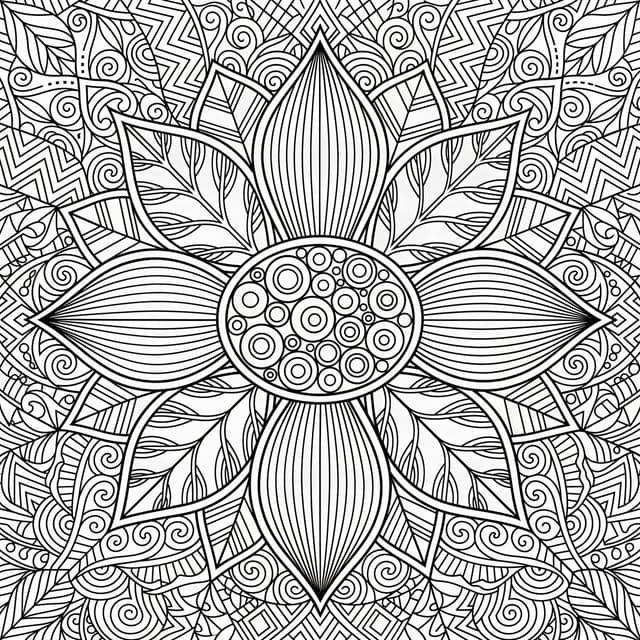
A black and white line drawing of a {argument name="flower type" default="stylized flower"} with {argument name="pattern style" default="intricate patterns"} fills the frame. The flower's center is an oval shape with smaller circles inside, surrounded by eight large petals. Each petal is decorated with parallel lines and some have a leaf-like shape. The background is a complex arrangement of geometric and organic patterns, including semicircles, zigzags, swirls, and a grid of dots. The overall composition is symmetrical, with the flower as the central focus, and the surrounding patterns radiating outwards.
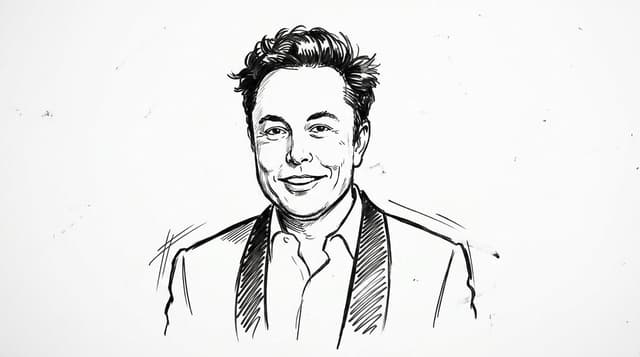
clean {argument name="style" default="whiteboard animation style"} illustration of the person from the reference image, drawn as a simple {argument name="medium" default="black marker sketch"} on a pure white background. Use bold hand-drawn outlines, minimal shading, and a slightly exaggerated cartoon-like style while still preserving the person’s recognizable facial features, hairstyle, and expression. Add subtle motion lines and sketch imperfections to mimic real hand-drawn animation. The character should appear as if being drawn on a whiteboard, with a casual, engaging, and educational vibe. Keep the composition minimal, high contrast, and visually clear, with no complex background elements
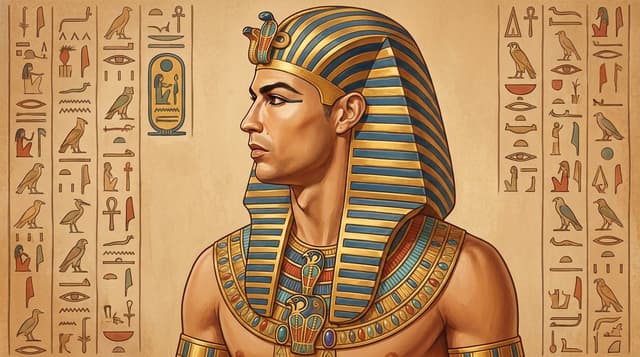
Ancient Egyptian profile portrait of the person in the reference image, side-facing pose (strict profile view), inspired by {argument name="style source" default="traditional tomb paintings"}, {argument name="features" default="almond-shaped eye, elongated eyeliner, sharp nose and chin"}, wearing a {argument name="headwear" default="nemes headdress"} and ornate gold jewelry, flat perspective, stylized proportions, warm sandstone and gold color palette, hieroglyphic background, smooth matte texture, soft even lighting, highly detailed, clean lines, 4k, museum-quality artwork
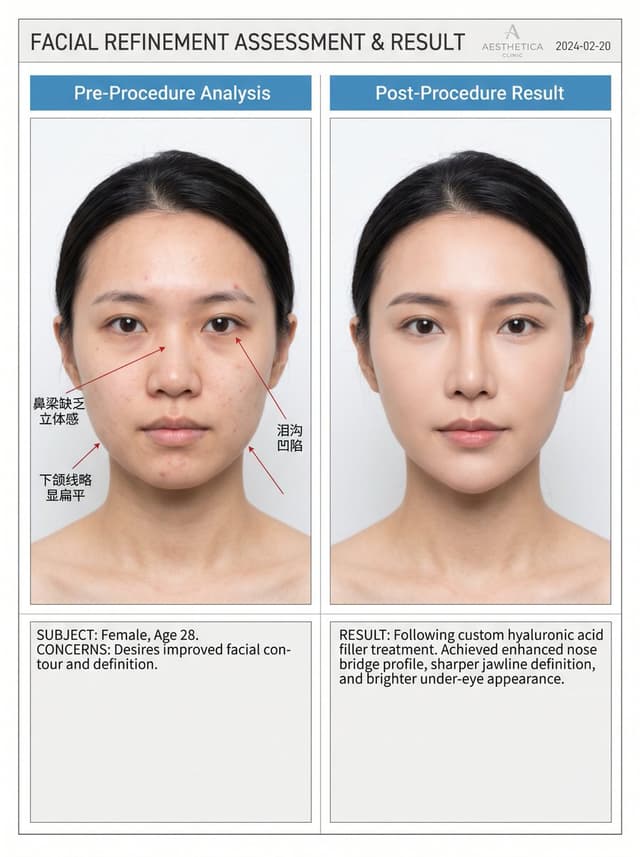
Professional high-end medical aesthetic before/after comparison blueprint, left panel "{argument name="left label" default="Pre-Procedure Analysis"}" with natural unedited face showing realistic imperfections (subtle asymmetry, softer jawline, mild under-eye shadows, natural skin texture). Red precise arrows and {argument name="language label" default="Chinese labels"} pointing to improvements. Right panel "{argument name="right label" default="Post-Procedure Result"}" showing same person with noticeably refined nose bridge, sharper jawline, brighter under-eyes, smoother yet natural skin, more defined contours. Clean clinical white/gray background, identical angle/lighting/expression, realistic photography style, professional clinic aesthetic, strong but believable transformation.
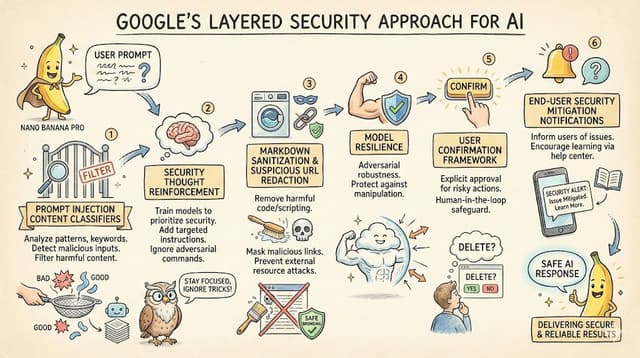
Prompt injection content classifiers—Proprietary machine-learning models that detect malicious prompts and instructions within various data formats.

Security thought reinforcement—Targeted security instructions that are added around the prompt content. These instructions remind the LLM (large language model) to perform the user-directed task and ignore adversarial instructions.

Markdown sanitization and suspicious URL redaction—Identifying and redacting external image URLs and suspicious links using Google Safe Browsing to prevent URL-based attacks and data exfiltration.

User confirmation framework—A contextual system that requires explicit user confirmation for potentially risky operations, such as deleting calendar events.

End-user security mitigation notifications—Contextual information provided to users when security issues are detected and mitigated. These notifications encourage users to learn more via dedicated help center articles.

Model resilience—The adversarial robustness of Gemini models, which protects them from explicit malicious manipulation.
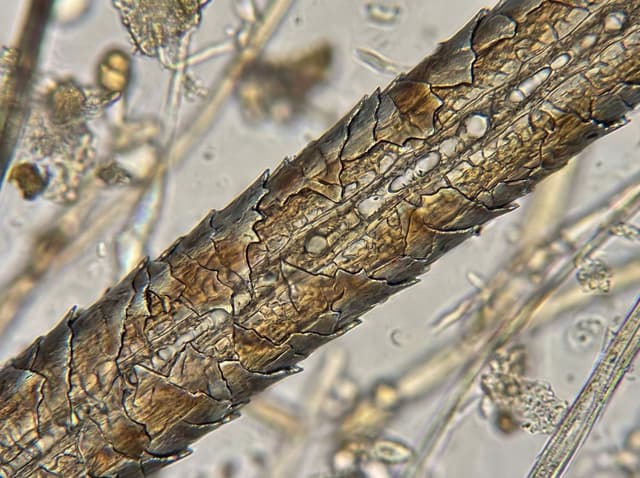
Imagine a {argument name="subject" default="[subject]"} through a microscope; picture it and create an ultra-realistic sharp image. No microscope parts, only subject.
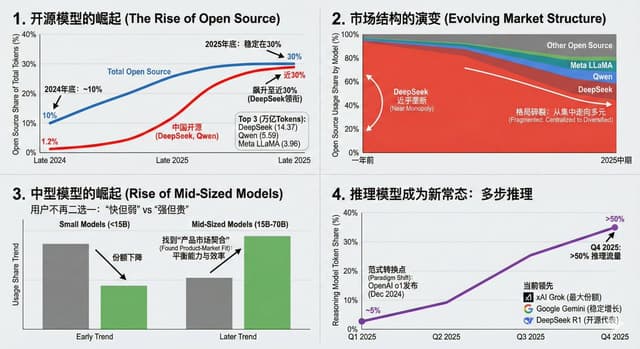
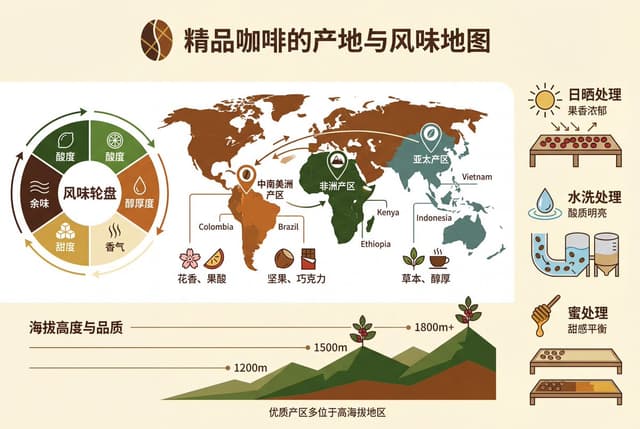
Based on the following topic [{argument name="topic" default="Map of Specialty Coffee Origins and Flavors"}], create a professional knowledge infographic. Requirements: 1) Extract 3-5 core knowledge points; 2) Use elements such as icons, flowcharts, and data visualization; 3) Information hierarchy must be clear, and visual guidance must be smooth; 4) Must include accurate Chinese title and explanatory text; 5) Color scheme must be professional and coordinated, suitable for business presentations. Layout should adopt a modern flat design style, 4K resolution, suitable for printing and sharing.
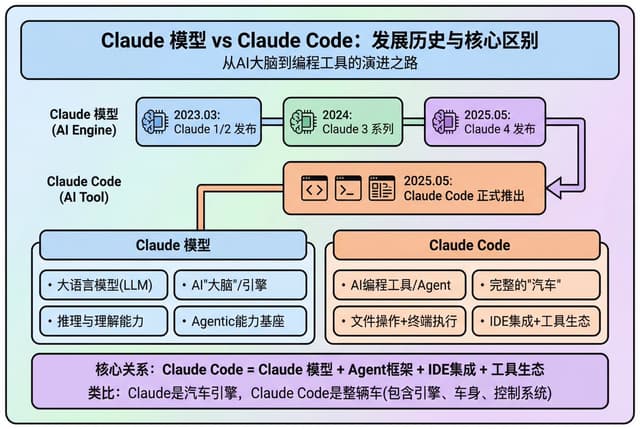
1. Overall Visual Style

Style Keywords: Flat UI, Vector, Modern Minimalist, Card-style design.

Lines and Shapes:

Rounded Corners Priority: All borders, background blocks, buttons, and process nodes must be rounded rectangles (Rounded Rectangles, with a large corner radius, approximately 10-15px).

Elbow Lines: Process connections use right-angle polylines (no curves), lines are simple and strong.

Color Logic (Key):

“Candy Color” Scheme: Use light backgrounds with high brightness and low saturation (such as light blue, light green, light purple), paired with darker borders of the same color family.

Border Emphasis: All graphics must have clear 2px~3px solid borders.

2. Vertical Layout Structure

Regardless of the topic, please follow the following top-down layout order, which must be contained within a large border container:

Layer 1: Main Title (Header)

Position: Centered at the top of the container.

Style: Bold black font, largest font size, darkest color.

Layer 2: Core Flowchart Area

Position: Occupies 50% of the core area of the layout.

Content: Rectangular nodes + arrow connections. If it is a loop step, please use a dashed line pointing back.

Layer 3: Feature List

Position: Below the flowchart, centered or left-aligned.

Style: Short and concise bullet points, slightly smaller font, with some white space.

Layer 4: Full-width Summary Box (Footer Box)

Position: At the very bottom of the container, filling the width horizontally.

Color Scheme: Use a contrasting color (such as purple in the example), distinct from the main color scheme above.

Function: Used to place 'Summary', 'Analogy', or 'Core Conclusion'.

Landscape size (horizontal/scenic mode) is chosen because:

Content Adaptation: Horizontal content like timelines is better displayed in a horizontal canvas to show the evolution process.

Presentation Friendly: The 3:2 horizontal ratio is very suitable for insertion into PPTs and documents, and displays well on projectors or screens.

Information Capacity: Horizontal layout can accommodate more text and icons, avoiding clutter.
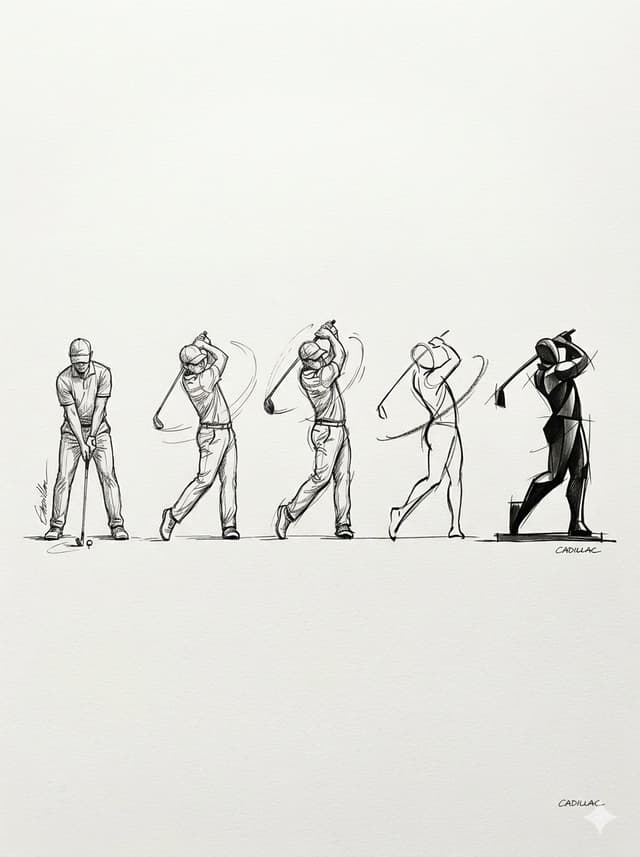
A prompt that generates a horizontal progression of golf swing sketches, moving from realistic ink drawings to minimalist abstract art, allowing for customization of the subject, art style, and artist signature.
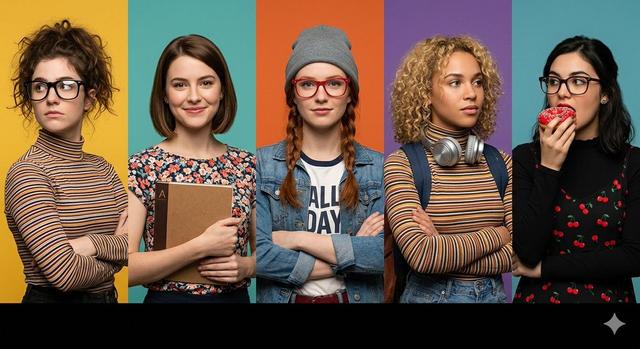
A prompt for a wide horizontal frame composed of five distinct vertical panels, each featuring a different character with specific styling, including customizable background colors and foreground elements.
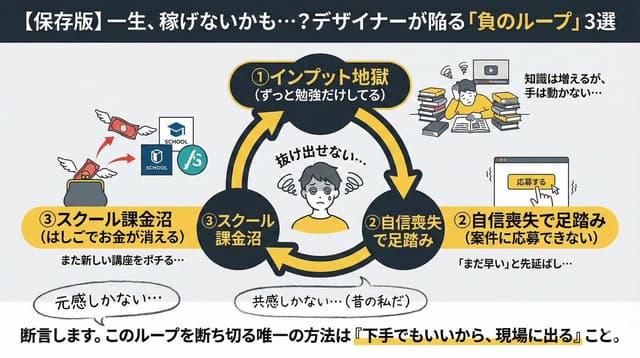
"Conditions to include in the diagram:

・Top 3 reasons why designers fail
① Always studying
② Lacking confidence to apply for projects
③ Spending too much money hopping between schools

Create an image for an X post based on these conditions"
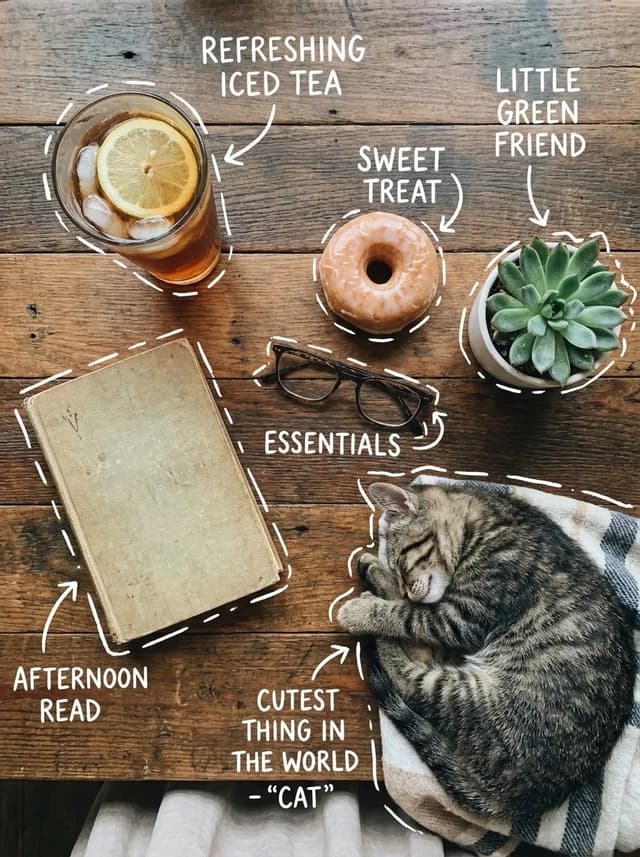
Top-down flat lay on a rustic wooden table, cozy aesthetic, soft natural light. A glass of iced tea with lemon slices and ice cubes, a glazed donut, a small succulent plant in a white pot, a vintage book, and eyeglasses. A sleeping tabby cat curled on a blanket at the edge. White hand-drawn doodle outlines and arrows around each object with playful handwritten labels like “refreshing iced tea,” “sweet treat,” “little green friend,” “afternoon read,” and “cutest thing in the world – cat.” Warm tones, minimal shadows, lifestyle photography, high detail, Instagram aesthetic. Cozy tabletop scene from a slight angle, warm natural lighting. A glass of iced tea with lemon and mint, a chocolate-glazed donut on a ceramic plate, a small succulent plant, a worn notebook with a pen on top, and a framed photo of a sleeping cat. Clean wooden surface background. White doodle-style outlines and arrows pointing to each item with handwritten captions like “refreshing iced tea with a kick,” “the sweetest morning treat,” “little green friend,” “a good read… eventually,” and “cutest thing in the world.” Soft focus, warm color grading, aesthetic lifestyle composition, high realism.
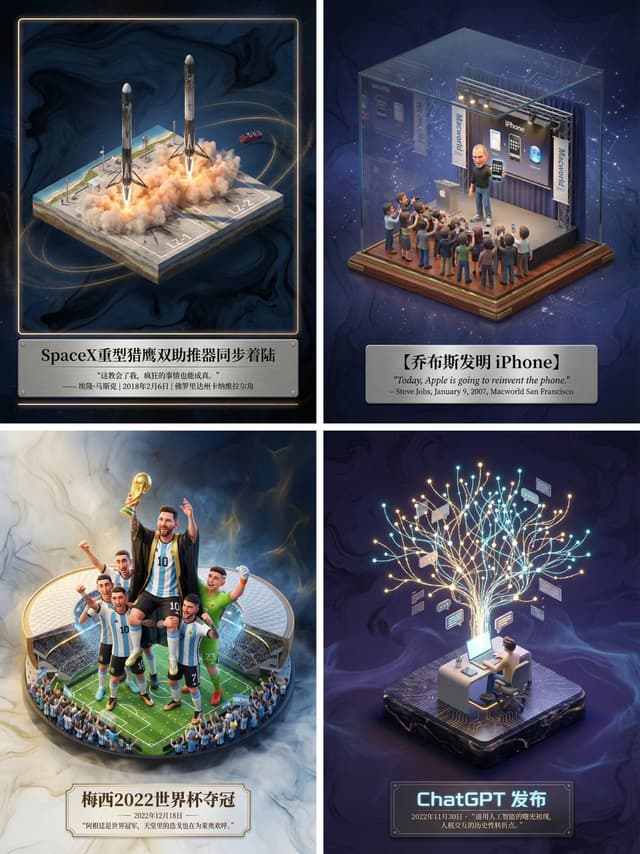
Please create a museum-grade 3D isometric miniature poster for [ {argument name="event name" default="SpaceX Heavy Falcon dual booster synchronous landing"} ], first retrieving relevant information to gain knowledge.

Step 1, Intelligent Recognition and Scene Construction: First, call upon your knowledge base to determine the category of the theme I input (is it fictional literature, real historical event, sports competition, or scientific discovery). Then, accurately retrieve the specific environment, core character actions, clothing details, and atmospheric conditions when the theme occurred. In the center of the image, establish an exquisite 3D miniature scene model. The style should maintain the high-precision texture and soft lighting rendering style of Dreamworks animation. If it is sports, emphasize the explosiveness of the action and the frozen moment; if it is history, restore the sense of era and solemnity; if it is literature, emphasize the artistic conception.

Step 2, Atmosphere and Background: Discard pure white backgrounds. Use a void environment with extremely faint ink wash texture and flowing light mist, with colors automatically adjusted according to the theme, creating a high-end sense of a “historical slice” or “precious artifact.”

Step 3, Layout and Text: Generate Chinese typography centered at the bottom. The main title should be the name of the event or work, with a font design that matches the theme style. Below the title, automatically retrieve and lay out the most famous quote, commentary, date, or historical evaluation of the event, using an elegant serif font. The overall layout should be exquisitely balanced, like a high-end museum collection plaque.
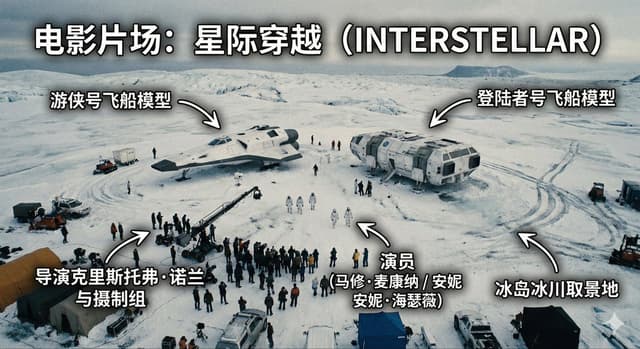
Generate an image of a film set, an aerial high-angle shot of one scene on the set, with annotations indicating the film set is: {argument name="film title" default="If Going to Work Were a Play"}
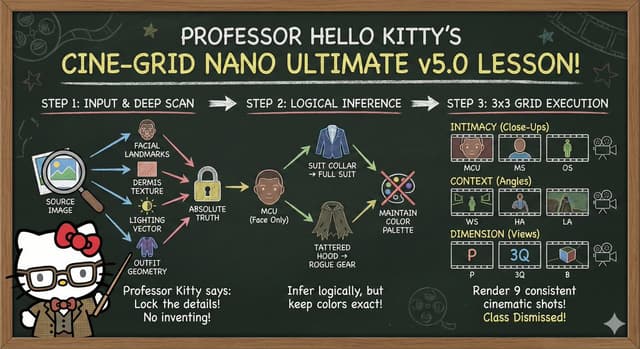
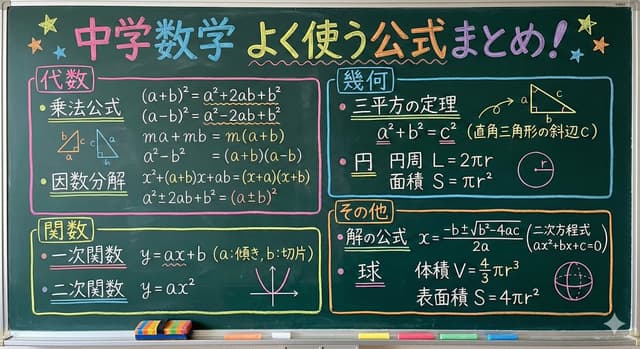
Please summarize the frequently used formulas for high school entrance exam mathematics, written on a chalkboard with chalk.
The formulas should be color-coded for each formula, resulting in a design that is easy to understand at a glance.
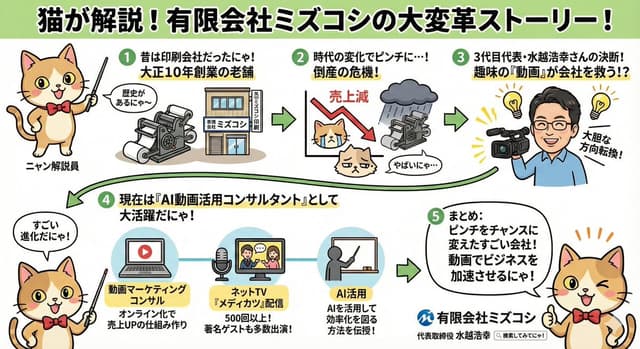
Search the internet for information about {argument name="company name" default="Mizukoshi Co., Ltd."} and create an anime-style graphic recording (grareco) where a {argument name="character" default="cat"} cheerfully explains the findings.