Infographic / Edu Visual - Nocturnal New York Archive Diorama
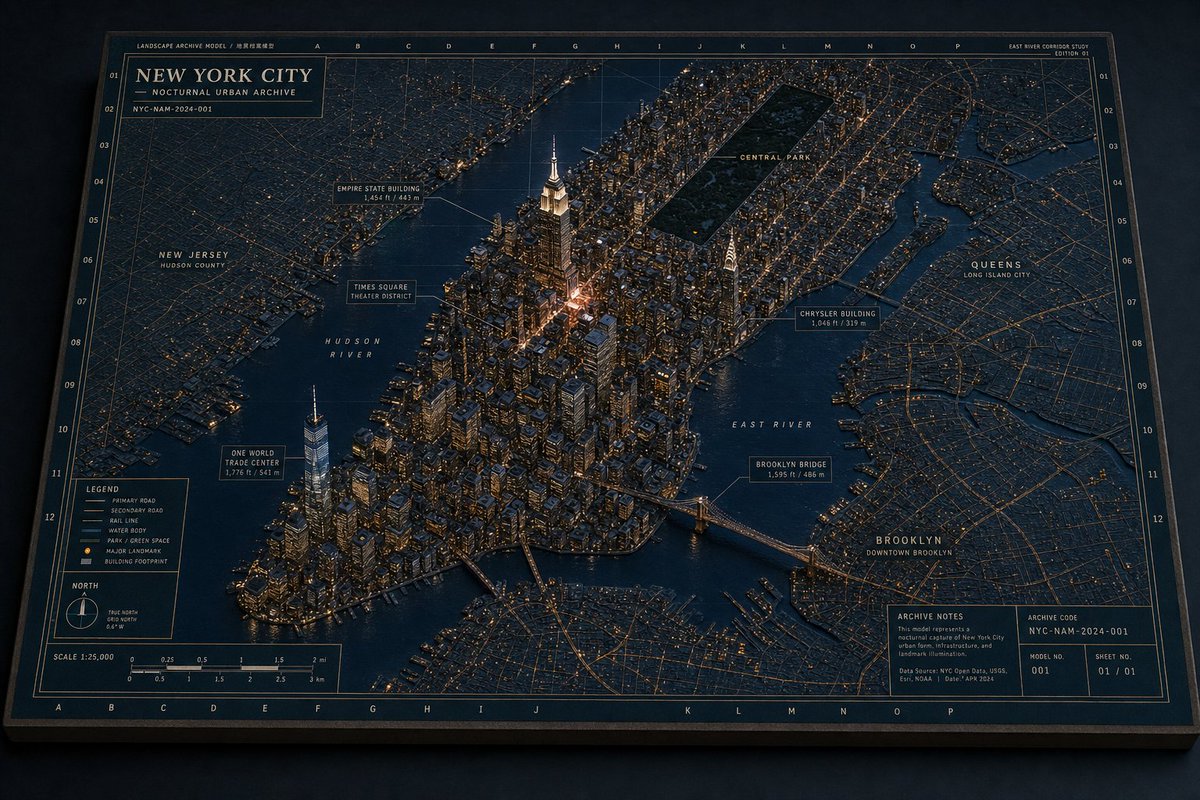
Generated output: Infographic / Edu Visual - Nocturnal New York Archive Diorama — output 1
Generates a museum-quality nighttime architectural archive board showing New York City as a raised 3D map diorama with labels, legends, and realistic materials.
Goal: Create a highly detailed physical museum-diorama style archival city map of {argument name="city name" default="New York City"} at night, titled as a “Landscape Archive Model / Nocturnal Urban Archive.” The image should look like a photographed, handcrafted architectural archive board: a flat printed map base with a raised 3D miniature city model emerging from it, illuminated by tiny warm building lights and cool navy ambient lighting.

Canvas: Wide 16:9 landscape photograph, three-quarter overhead view, the entire rectangular archive board visible on a dark tabletop. Use a deep navy, charcoal, brass, and warm amber palette. The board has a thick dark frame, subtle paper grain, bevelled edges, cast shadows, and tactile museum-model realism.

Layout: Center the raised 3D miniature of Manhattan, surrounded by flat engraved map regions and waterways. The rivers should be dark glossy blue with subtle reflections. The background map includes fine street grids, coordinate lines, latitude/longitude style guide marks, and archival border numbering. Add a precise top-and-side grid system with letters along the top and bottom and numbers down the left and right edges. Include thin brass annotation lines connecting labels to landmarks.

Main subject details: Show Manhattan as a dense raised cluster of miniature buildings with glowing windows. Make the Empire State Building stand tall near the center with a bright lit crown. Include One World Trade Center near the lower-left Manhattan area, the Chrysler Building to the right of Midtown, Times Square as a glowing central district, Central Park as a dark rectangular green-black void in upper Manhattan, and the Brooklyn Bridge crossing the East River toward Brooklyn. Surrounding borough and regional labels should appear flat on the map.

Text content and labels: Use elegant uppercase archival typography in off-white and brass. Include exactly 18 visible labeled map/annotation elements: 1) main title “NEW YORK CITY”, 2) subtitle “NOCTURNAL URBAN ARCHIVE”, 3) archive ID “NYC-NAM-2024-001”, 4) top micro-label “LANDSCAPE ARCHIVE MODEL”, 5) “EAST RIVER CORRIDOR STUDY / EDITION 01”, 6) “EMPIRE STATE BUILDING / 1,454 ft / 443 m”, 7) “TIMES SQUARE / THEATER DISTRICT”, 8) “ONE WORLD TRADE CENTER / 1,776 ft / 541 m”, 9) “CENTRAL PARK”, 10) “CHRYSLER BUILDING / 1,046 ft / 319 m”, 11) “BROOKLYN BRIDGE / 1,595 ft / 486 m”, 12) “NEW JERSEY / HUDSON COUNTY”, 13) “HUDSON RIVER”, 14) “EAST RIVER”, 15) “QUEENS / LONG ISLAND CITY”, 16) “BROOKLYN / DOWNTOWN BROOKLYN”, 17) “LEGEND”, and 18) “ARCHIVE NOTES”.

Inset panels: Include exactly 4 boxed information panels integrated into the board: a title panel in the upper left, a legend panel in the lower left, a scale-and-north-arrow panel along the bottom left, and an archive-notes/model-code panel in the lower right. The legend panel should contain exactly 6 line/icon entries: primary road, secondary road, rail line, water body, park/green space, and major landmark/building footprint. The lower-right archive panel should include model code “NYC-NAM-2024-001”, model number “001”, and sheet number “01 / 01”.

Lighting and material style: Nighttime editorial photography, warm amber city lights, cool blue shadows, crisp miniature details, realistic depth of field, slight vignette, matte printed paper texture, metallic ink lines, raised resin/wood model buildings, tiny glowing windows, and realistic cast shadows. The overall result should feel like a production-quality architectural archive model photographed in a museum studio.

Constraints: Keep the design restrained, precise, and premium. Do not add people, vehicles, logos, watermarks, or modern UI elements. Preserve a consistent archival map language, make all text look printed on the board, and avoid fantasy or sci-fi styling.
OUTFIT:
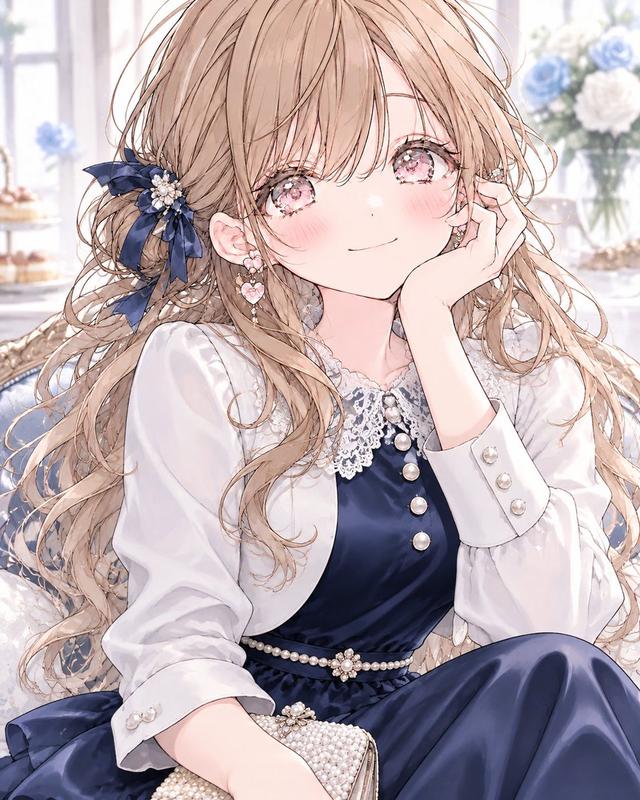
A {argument name="dress color" default="navy blue"} satin midi dress with elegant long sleeves and a delicate white lace collar, creating a refined, classic silhouette.

Accented with a thin pearl belt at the waist and layered with a small white bolero jacket for a graceful feminine touch.

Styled with black Mary Jane heels decorated with small ribbon details and a compact pearl clutch bag.

Elegant, romantic, classic café-date fashion aesthetic.
Navy blue, crisp white, black, and pearl ivory color palette.
Smooth satin, delicate lace, luminous pearls, and polished fabric textures.
Sophisticated, feminine, timeless seasonal styling.
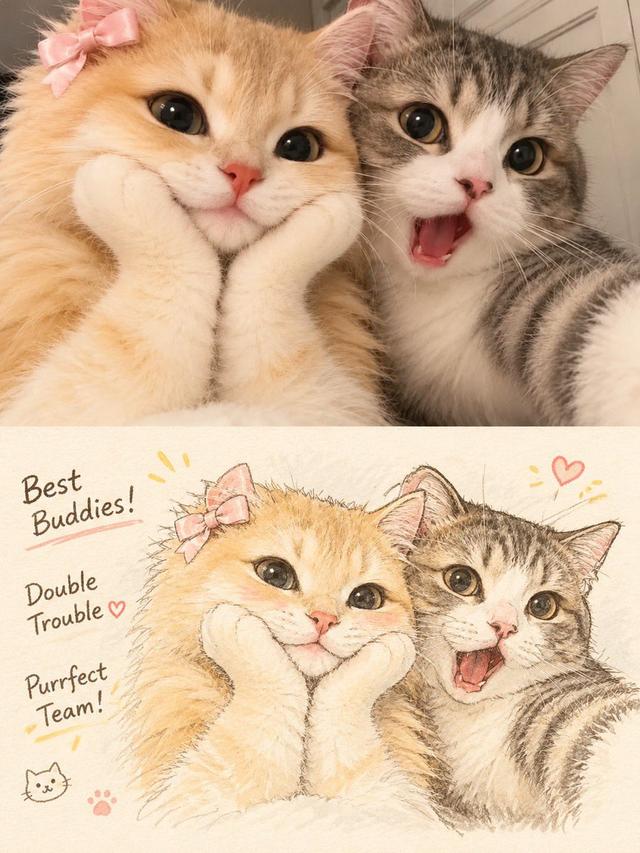
Transform the uploaded photograph into a beautiful, hand-drawn watercolor illustration comparison poster.

LAYOUT & COMPOSITION:
Create a vertical 3:4 poster divided into two equal horizontal sections.

TOP HALF — ORIGINAL PHOTO:
Display the original uploaded photograph exactly as it is. Preserve the original subject, pose, clothing, background, lighting, colors, and composition without alterations.

BOTTOM HALF — WATERCOLOR ILLUSTRATION:
Recreate the exact same photograph as a delicate, hand-painted watercolor and colored-pencil illustration. Preserve the subject's identity, facial features, hairstyle, expression, clothing, pose, proportions, and surroundings.

Use soft watercolor washes, delicate ink outlines, visible pencil strokes, subtle paper texture, warm pastel tones, gentle shading, and beautifully imperfect hand-drawn details. Give the illustration a charming Korean/Japanese lifestyle sketchbook aesthetic.

DECORATIVE DETAILS:
Add handwritten playful typography that complements the subject and scene. Include small hand-drawn doodles such as hearts, stars, arrows, crowns, underlines, or sparkles. Generate a short, creative phrase that matches the subject's personality or mood.

BACKGROUND:
Maintain the original environment but reinterpret it with loose watercolor brushstrokes, simplified scenery, and soft artistic details.

OVERALL STYLE:
Dreamy, cozy, youthful, elegant, artistic, and slightly whimsical. Use warm off-white textured watercolor paper as the illustration background.

IMPORTANT:
- Keep the original photograph completely unchanged in the top section.
- The bottom illustration must clearly depict the exact same moment.
- Do not invent additional people or objects.
- Maintain strong visual similarity to the original photograph.
- Make the typography look naturally handwritten, not digitally typeset.
- Ensure a clean 50/50 split with balanced composition.

High-quality editorial art poster, 3:4 vertical aspect ratio.
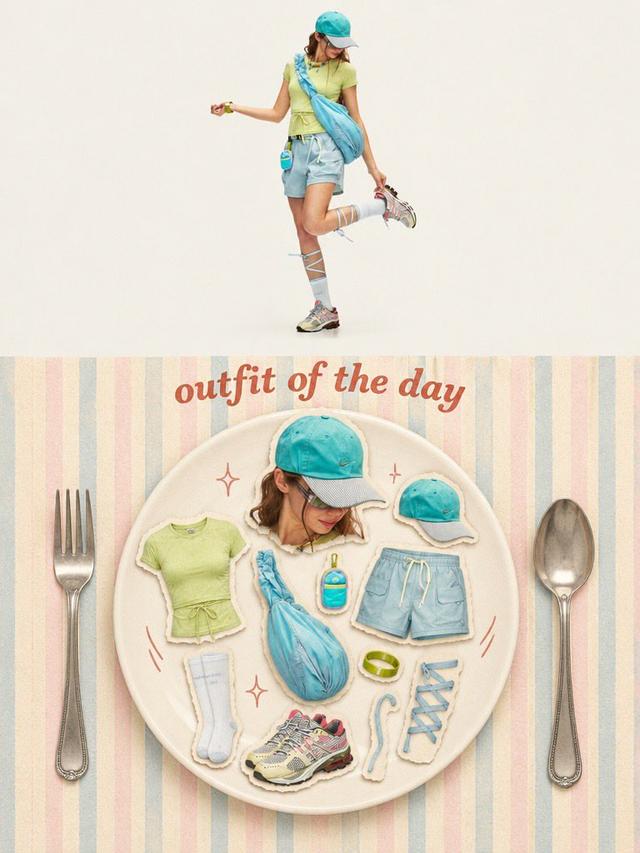
Transform the uploaded photo into a stylish OUTFIT OF THE DAY editorial fashion collage in a vertical 3:4 composition.

TOP SECTION (50%):
Create a full-body, high-end fashion editorial photograph of the person wearing the exact outfit from the reference image. Preserve their facial identity, hairstyle, clothing, colors, accessories, shoes, and natural proportions. Use a clean, warm ivory studio background, soft natural lighting, and a relaxed fashion-model pose.

BOTTOM SECTION (50%):
Create a creative flat-lay fashion moodboard arranged on a large elegant ceramic plate. Display individual outfit components as realistic paper-cutout stickers with subtle white borders and soft shadows, including:
- A cutout portrait of the person.
- Top, trousers or skirt.
- Shoes and socks.
- Hat, bag, jewelry and accessories.
- Any additional objects visible or relevant to the outfit.

Arrange everything aesthetically inside the plate, as if presenting a complete outfit recipe.

DESIGN & DETAILS:
Add elegant vintage-inspired typography reading "OUTFIT OF THE DAY" above the plate. Use a pastel striped background, oversized silver fork and spoon on either side, tiny hand-drawn sparkles and playful doodles.

VISUAL STYLE:
Premium Korean fashion magazine aesthetic, Pinterest-inspired editorial design, warm cream tones, pastel colors, realistic product photography, scrapbook collage, paper-cutout sticker effect, soft shadows, playful composition and refined vintage styling.

IMPORTANT: Automatically identify the clothing and accessories in the uploaded photo. Do not invent a different outfit or change the person's identity. Every item in the flat lay must correspond to the actual outfit or its visible accessories.

Ultra-detailed, polished graphic design, balanced composition, 3:4 vertical poster.
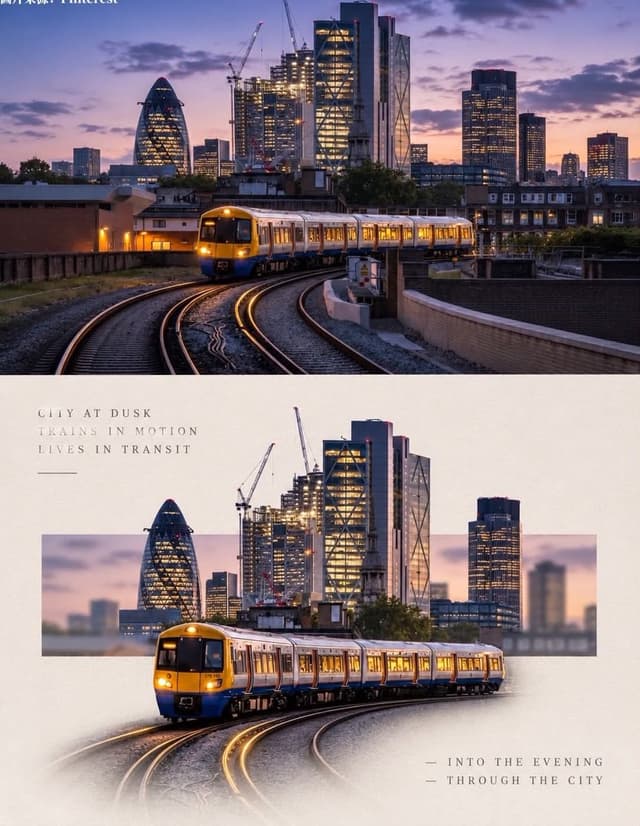
Using the uploaded photo, create a 3:4 vertical poster split into top and bottom halves that touch seamlessly, with no white line, gap, or border between them.

Top: the original photo, full-bleed.

Bottom: a warm off-white textured paper background. The main subject is cut out, enlarged, and centered. Behind it, a thin horizontal rectangle shows a blurred crop of the original scene, and the subject breaks out of the frame (3D pop-out). The subject's base fades softly into the paper with natural particles, shadow, or reflection. Add small uppercase serif text in light grey with wide spacing: 3 short poetic lines at top-left and 2 lines with a "—" at bottom-right. Minimal gallery-poster style, photorealistic.
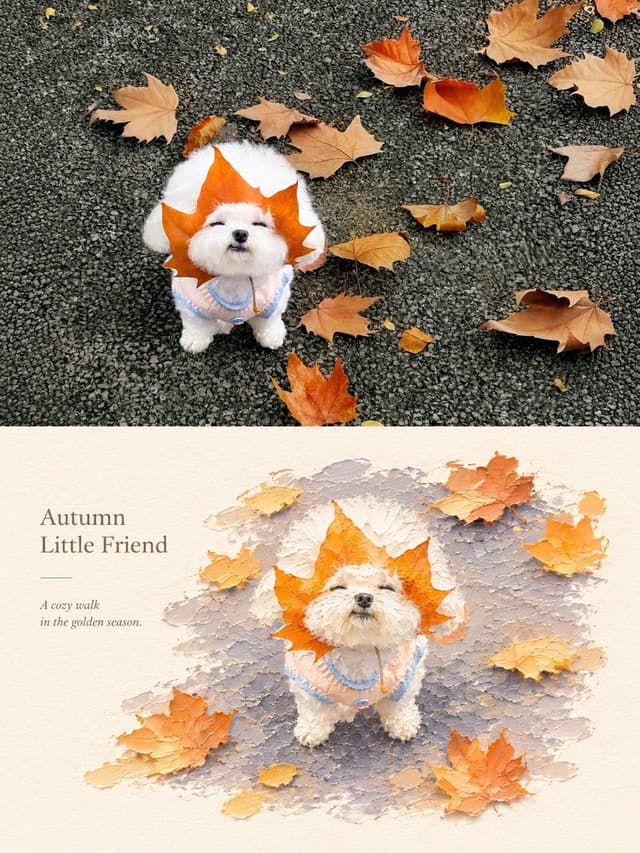
Create a premium 3:4 vertical photography and impasto oil painting comparison poster using the uploaded photograph.

### LAYOUT
Divide the canvas into two perfectly equal horizontal sections (50/50):
- Top: Original photograph.
- Bottom: Artistic impasto oil painting interpretation.

Both sections must connect directly with a clean horizontal boundary, without gaps, gradients, or overlapping.

### TOP SECTION — PHOTOGRAPHY
Preserve the original subject's identity, quantity, pose, proportions, silhouette, details, composition, perspective, lighting, and natural colors. Apply only subtle premium color grading. Do not redraw, distort, duplicate, reposition, or alter the subject. No text or decorations.

### BOTTOM SECTION — ARTISTIC INTERPRETATION
Reimagine the same subject as a sculptural impasto oil painting micro-landscape. Use thick layered paint, palette-knife textures, handcrafted forms, raised edges, and expressive brushstrokes.

Keep the subject recognizable, centrally or slightly off-center, surrounded by generous warm-white negative space. Introduce a single color band inspired by the original photograph, transformed into a ground, water, pathway, or abstract landscape element.

### COLORS & TEXTURES
Extract a harmonious, limited color palette from the original photograph. Preserve the subject's natural color character while adding subtle brightness and luminosity. Use rich paint textures selectively, with refined subject details and delicate matte paper texture.

### TYPOGRAPHY
Add a short, elegant English title and one small supporting line within the lower section's negative space. Use thin, minimal typography. Generate text based on the actual subject or mood. Avoid invented dates, locations, logos, signatures, and unnecessary annotations.

### AESTHETIC
Quiet, minimal, sophisticated, and editorial. Create a collectible fine-art publication aesthetic through negative space, sculptural depth, material textures, and balanced composition.

### AVOID
Photo collages, altered subjects, unrelated scenes, illustrated photography, extra title bars, clutter, excessive decorations, incorrect text, watermarks, cartoon styles, neon colors, oversaturation, muddy tones, plastic-looking 3D, and cheap CGI.
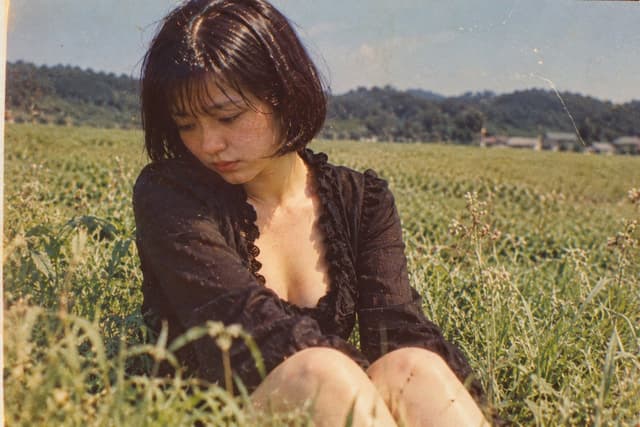
A nostalgic, vintage-style photograph of a young woman sitting in a lush green field. She has short, dark bobbed hair with bangs and is looking down with a pensive, melancholic expression. She wears a black, long-sleeved top with a deep V-neckline featuring ruffled edges. The background shows a vast expanse of tall grass or crops stretching toward distant hills under a clear sky. The image has a distinct retro aesthetic, characterized by film grain, warm color tones, scratches, and dust spots typical of old analog photography from the Showa era.